Top five post-COVID-19 predictions

How will COVID-19 leave society changed?

New York’s new normal

Each day as I step outside, keeping at a social distance, I am reminded of how not normal New York City life is right now. Empty sidewalks, save for the homeless and a few runners. Wary looks behind masked faces. Empty roads and fresh air. Supply shortages and long grocery store lines, for those who brave them. A sudden interest in the movie Contagion. This is the new normal. And when this passes, I wonder, what will the new new normal look like? I offer five predictions about how society, government, and individuals will change — or not change, as the case may be:

  1. Niche media will become more mainstream than mass media
  2. Everyone will emerge with a new survival skill
  3. Asthma cases will drop, as the air quality improves with less pollution
  4. Both parties will take the crisis as evidence that their principles are the right ones
  5. Social activism will see a significant jump

I predict these changes, because they are already underway. Here’s what I’ve observed in the last few weeks of quarantine:

1. Niche media will become more mainstream than mass media

John Krasinski and Steve Carell, Some Good News, Episode 1

In the early days of corona virus news, national “reporting” was a loose term — you could read article upon article and learn almost nothing. As the severity of the situation became clear, hand-wavy vagaries just weren’t enough to keep us informed about how to stay safe. My peers and neighbors quickly started relying on a narrower set of localized and trusted sources for the intel we needed on the pandemic. The Daily by the New York Times became the most pervasive, providing a combo of expert advice and front-line reporting. As New York became the epicenter of the U.S. outbreak, and no national support emerged, Gothamist emerged as one of the best sources of informative and actionable coverage. They gave locals a source of food security by reporting on Baldor, a restaurant supplier turned direct-to-consumer, with higher quality and better prices than anything on Instacart. The TLDR from national news outlets, by contrast, was just ‘food is getting harder to buy… countries should do something about that.

The same-y-ness, shallowness, and sensationalism of mainstream news has spurred other niche counter-movements in media. Some Good News with John Krasinski has brought the local global, featuring positive COVID-19 stories of hope, solidarity, and recovery from around the country and the world. He’s married curated, hand-made content contributions with global icon pop-ins, notably Steve Carell and Lin Manuel Miranda. At 16 million views for Episode 1, SGN’s popularity has blown every prime time show out of the water. In effect, channels like SGN are making YouTube more mainstream than ABC or CBS.

2. Everyone will emerge with a new survival skill

First quarantine-inspired, homemade bread

All the twenty-somethings of New York have discovered their kitchens, perhaps for the first time, as take-out has become more of a luxury than a norm. “I’m confident we can survive the apocalypse now,” my husband smiled, with a sigh of relief, when our 50-pound flour order arrived from a Queens wholesaler. He made his first-ever homemade bread. I have picked up running and stair climbing in lieu of a gym, and could easily make it to any bridge of the island if needed. All we need now is to take some streaming karate lessons, and we will be ready to kick some zombie butt if a worse kind of outbreak happens.

3. Asthma cases will drop, as the air quality improves with less pollution
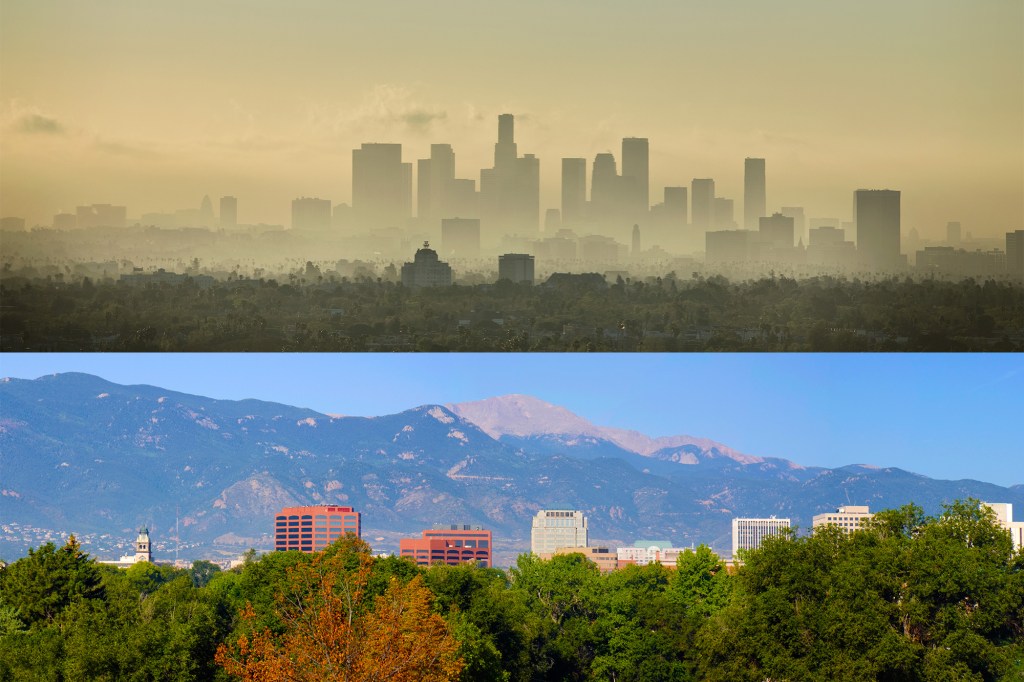
U.S. cities with the best and worst air quality, Realtor.com

Few cars on the road and planes in the air doesn’t just mean we can wander the streets and tarmacs unfettered. It means we can breath deep and feel refreshing, mountaintop-quality air, even in the middle of New York City. This can only be positive for children as they develop. As an urban-dweller who developed chronic rhinitis at a young age, I can’t remember what normal breathing feels like. While some argue impaired smelling is a benefit in New York City, I still hope young New Yorkers today continue to reap the benefits of our reprieve from pollution. In a dream world, we would mandate the sunset of combustion engine vehicles and allow only electric vehicles within city limits. I won’t hold my breath for New York to be the vanguard of new clean air policies, but maybe California can pave the way.

4. Both parties will take the crisis as evidence that their principles are the right ones
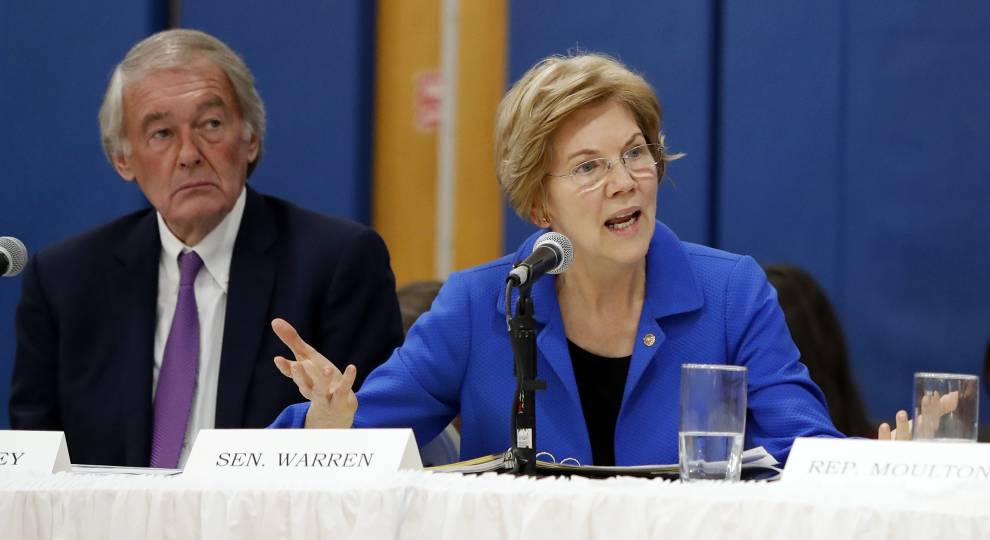
Massachusetts Senators Ed Markey and Elizabeth Warren, WGBH

In response to the coronavirus crisis, Republicans and Democrats alike have taken refuge in their respective ideologies. Conservative groups have mobilized to demand that the U.S. re-open the economy, while liberals have reminded us that people *are* the economy. The GOP’s economy-before-people stance has led to a temporary demand for big government, but no significant shift in their social safety net policy stances. Democrats, by contrast, consider this crisis as evidence that our safety net policies are already far too weak. While the 2020 election campaigns are essentially on hold for now, I expect to see renewed campaign efforts in the fall that will amount to a battle of ideologies for what we want post-COVID-19 America to look like.

5. Social activism will see a significant jump

Change.org highlights COVID-19-related petition victories

This crisis has led to a number of spotlights on companies and institutions reaping concentrated benefits while trying to pass on the pandemic’s costs to the larger populations they serve. WeWork is still charging tenants in cities with shelter-in-place orders. Amazon fired a protesting employee who called out unsafe working conditions following a streak of in-warehouse COVID-19 cases. When the stakes are life and dealth, right and wrong become fairly black-and-white. It also gives people more to fight for. We’re seeing more masses of people taking action. Millions have signed petitions through Change.org, and many more are organizing and making their voices heard. I expect this momentum to continue as the aftershocks of the crisis continue to reverberate.

Predictions unfurled

For better or for worse, this crisis will have a long tail, not just through the presence of the virus, but also in how our society is changed by the crisis. The five trends above are already under way, and will build as we adapt and reshape our social systems in the wake of COVID-19.

The Index Card Summary of “The Upside of Stress”

In the era of COVID-19, emotional, physical, and financial stress have become inescapable for the foreseeable future. And with every time of hardship, we have a choice about how to respond to it. At least that is the premise of The Upside of Stress: Why Stress is Good for You and How to Get Good at It by Kelly McGonigal, PhD. Her research-based advice can be summed up in 3 simple points:

  1. There are three types of stress responses:
    • Fight or flight response
    • Challenge response
    • Tend and befriend response
  2. You can influence which stress response you experience
  3. Choosing a more helpful response is beneficial in virtually all circumstances

Below is a brief dive into the findings and advice behind each point above.

1. There are three types of stress responses

Stress responses come in three flavors: fight or flight, challenge response, and tend and befriend.

Fight or flight is the best known but most maladaptive, because it primes you to either fight or run — neither of which is appropriate if triggered in most modern settings. (Fist fights with people not observing social distancing is not advisable).

By contrast, the challenge response is a physiological reaction to stress that increases self-confidence, motivates action, and helps you learn from your experience. A challenge response makes you feel focused, not fearful, and creates a sense of flow that allows you to rise to the occasion.

And finally, the tend and befriend response releases stress hormones that increase courage, motivate care-giving, and enhance empathy, leading to strengthened social relationships.

While fight or flight is a self-protective response, the challenge response and tend and befriend response produce more pro-social outcomes.

2. You can influence which stress response you experience

How you think about stress can directly determine how your body processes it. If you perceive stress as a threat, you are more likely to have a fight or flight response, which negatively impacts both your psyche and physiology. Alternatively, if you have an optimistic framing of stress, invoking the challenge response or tend and befriend response, your body will release the types of stress hormones that help you recover and learn.

You can choose to think or act in ways that are known to trigger positive stress responses. Learning a new point of view has been shown to transform the stress response. For example, journalling for five minutes about the hardest experience of your life and what you learned from it that later improved your life can lead to a lasting improvement to life satisfaction and resilience. Specific actions, like volunteering for a charity, can invoke a positive stress response by shifting from self-focus to larger-than-self-focus.

3. Choosing a more helpful response is beneficial in virtually all circumstances

If you harness your stress response to help you engage and grow, over time you can experience “stress inoculation”: your brain will become conditioned to seeing stress as an opportunity to learn. McGonigal has found measurable benefits across social circumstances and psychological states. Adversity creates resilience and correlates with higher satisfaction.

What you can do today

Consider what your narrative about stress is, your behaviors around stress, and how those make you feel. What beliefs can you trade up for ones that give you hope, bravery, resilience, or a sense of connection? Such small shifts in mindset can lead to a cascade of effects. So rather than changing a million things in your life, change your mindset, and the rest will flow.

Scaling company culture with AI: an interview with George Swisher, CEO of LiiRN

Can AI help foster cohesive community in an organization? LiiRN thinks so.

Source: Simplilearn

Creating a healthy work environment that scales is something of a holy grail for all growing companies. As internal networks become more dispersed and organizational structures grow more complex, it becomes easier for communication disconnects to occur. How can companies continue to cultivate a shared vision and culture, and give employees a chance to define and improve both? LiiRN CEO George Swisher thinks the answer is AI-driven.

Swisher founded LiiRN, a people-centric, AI-powered transformation software, in 2018. The AI platform has a two-fold purpose: to help leaders make decisions based on employee feedback, and then allow employees to participate in enacting those decisions. The LiiRN platform collects customized survey data on leadership performance and company priorities. The AI synthesizes upward feedback, converts it into leadership performance ratings, and identifies quantitative and qualitative trends and findings to inform decision-making. The platform also invites self-nominated change-agents to shape and drive forward company-wide initiatives.

In an interview with Swisher, he shared how AI can drive rather than reduce personal connection, and help business leaders to listen to and lean on their people.

What problem are you solving with LiiRN?

LiiRN aims to help companies drive change through people versus processes. Many leaders working to design strategy end up working with small populations of people, doing surveys or doing stakeholder interviews. But trying to drive a huge change with the input of a small group of people is a disservice to both the firm and the company. People are fearful of change when they don’t understand it. So a few years ago I thought, what if I had the ability as an individual consultant to work with all hundred thousand employees in real time? The impact would be tremendous.

And so the idea was to launch a software that could do that, that could physically touch people as if it was someone you knew and who understood the big program that was going on out there and help the employee relate. When you drive change from the bottom up instead of from the top down, you avoid the education and awareness gaps that come with large scale change.

Companies can use our technology as kind of a middleware between the leadership and staff, to find the gaps between what leadership thinks and what the people on the ground are actually seeing and thinking. Our voting feature makes people feel like they’re part of the decision-making process. If you can do that for a company, say, that’s 100,000 employees, you’re able to help 100,000 employees feel like they’re contributing to a decision that the leadership is making. You get people who are more empowered, and I think that’s a big emotional feature of how you activate people. It automates some of the change management processes and helps leadership make decisions and investments that their company believes in. With ongoing feedback collection, you can create a dynamic feedback loop, to continually shape the change journey.

What are some of the most common pain points the leaders you work with encounter?

New leadership teams are sometimes nervous to listen to data and to draw conclusions if it can be interpreted in multiple different ways. It’s one of the reasons that we have moved to partnering with consulting firms with expertise in software-based data analysis. We use the data to quantify how many people activate and why. Typically, we see north of 30% of the total population raising their hand to be on a work stream in a specific change management area.

If you have lower adoption, we use the data we collect to understand why. We track when people opt out or say “I don’t understand what you’re asking and talking about.” This feedback surfaces whether the real issue is understanding and awareness, versus the willingness of people to participate. Alternatively, the data can also show if people think the initiative is misguided or has implementation risk. Leaders gain transparency through the software’s data analysis.

It sounds like you’ve found ways for AI to create more human interactions. What are the limitations to leaning on AI? In what ways can AI tools be anti-social, and how do you mitigate those risks?

If you’re going to trust the output of our system, you have to know it’s based on the right input. Potential biases to data come in so many different forms. Ideally, if we look at, for example, who is in the sample population that you’re getting information from, we’d account for any skewing as we analyze it. We have limited control, of which population, the stakeholder at the enterprises chooses to invite into our software. So if they choose to only involve the US population and use that information to influence the way they make decisions for their Asia-based population, for example, that clearly creates a lot of challenges, given the cultural differences. We work to screen out and limit bias with some of our onboarding screens and some of the setup and training that we do. We promote as much as we possibly can an approach of widening the sample size, to make sure that you’re involving as large a population as possible that is as diverse as possible. But there’s definitely limitations to it. It’s hard to solve it when you’re collecting what others choose to input.

Also, if there is a high concentration of a certain demographic in a company, we can’t control for who they’ve hired. So if they’re only getting information from a specific group of people that’s the majority of their population, it clearly sways the input that we’re getting and the resulting outcomes. So for us, I think we’re trying to maintain a middle ground where we highlight who companies are asking for input from and how it impacts the output. 

We’re focused on making our data inputs more comprehensive by integrating with more internal systems in our upcoming work. HR systems can provide added layers of data, like performance management data and learning data; systems like NetSuite provide more business performance data. The more that we can integrate, the more our machines can learn, and the more we can build better cases for the viability of the decision we’re recommending.

Change management in the context of technology often raises the specter of worker displacement. How can technology-based change management tools like yours help us prepare for an unknown future of work?

What I learned personally moving from a tech-enabled service businesses working with big enterprises to being a full software company is that technology isn’t replacing us. There is a fear of tech advancing too fast. But I think the bigger question is how do we reskill and retrain ourselves? And how will we hold the enterprises of the world responsible for managing change? Even if there are people who will be losing jobs, which is never a good thing, we have the opportunity to say, “Well how do we rethink what workers are doing and what new skills they need to adapt? And how can we help them do that?” Yes, we’ve introduced self checkout into the grocery store. But if we’re going to replace those people, what are the skills they have that we can still benefit from? They may be really great at customer service and customer success — can you retrain them to help people shopping inside the store, to create a personalized experience? Flipping the way that you look at it can help people understand the opportunity. Then we all advance. But a lot of companies don’t think that way when they’re developing or implementing automation technology.

It’s a large number within consumer retail and manufacturing — upwards of 70% of some of the largest companies and employers in the world — whose jobs will be automated away in the next 10 years. The magnitude of that is scary. Unless you retrain people to think about it as an opportunity and change the way that they’re actively pursuing alternatives, we’re going to have problems. Being a coder isn’t the answer for everyone.

Tesla is the new Starbucks

Making the common uncommon

There are few companies that manage to define a market, and even fewer that manage to re-define a market. Consider two companies that have turned necessities into luxury products with powerful brand equity: Starbucks and Tesla.

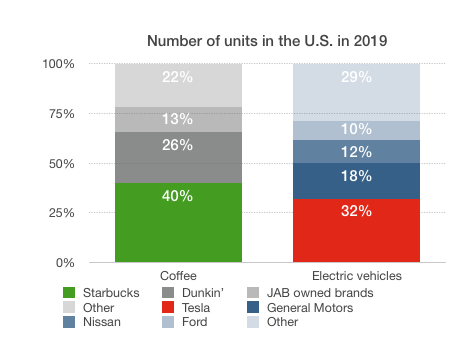
Starbucks developed a masstige product in a previously commoditized category. Morning commuters went from 50 cents Styrofoam cups to $5 shmancy coffees as part of their daily routines. Tesla is carving out a similar growth path by redefining the electric vehicle (EV) market and the automotive industry more broadly. Tesla introduced luxury to a product category previously seen as an R&D experiment. Over the last decade, EVs have gone from virtually non-existent to widespread, with roughly 1.2 million on the road in the U.S. — and a big chunk of those are Teslas. The two companies are on a similar trajectory, and for similar reasons.

The parallel paths of Starbucks and Tesla

Starbucks and Tesla are on track to achieving similar market share in the U.S. Tesla announced in their Q4 earnings call that they expect to sell over 500,000 vehicle in 2020. This 50% bump in year-on-year global fleet growth will position Tesla to gain market share of the U.S. EV market comparable to Starbucks’ share of the U.S. coffee market.

Source: Statista, EEI, MBA in the City analysis

How are these two companies landing in such similar places? It has to do with the two key strategies they share:

  1. Delivering superior user experience
  2. Establishing strong economic moats

With these two cornerstones, both companies are not only leading their categories, but also positioning themselves for long-term success. But don’t take my word for it. Let’s look at the facts and figures that are proving out their strategies.

1. Superior user experience

Starbucks and Tesla have each created superior user experiences that are entwined with their brand identities — in large part because those experiences departed from what was seen as possible in their markets.

Starbucks has defined the category of quality coffee by created a seamless, pleasant customer journey. From app orders to friendly baristas calling your name, the familiarity of a Starbucks PSL has a tug that brings in customers in Hawaiian Septembers. (I speak from experience). Starbucks’ category-defining success has been proven out by their dominance in the premium coffee market. As artisanal “hipster coffee” shops have sprouted up, consumers can find a multi-sensory coffee experience within walking distance in any U.S. urban center. Now I can get oat milk flat whites with a dusting of cinnamon just about anywhere in the Big Apple. Yet even as boutique cafes have emerged across NYC, many people still go to Starbucks, because they are reliable. As an early mover in premium coffee, Starbucks effectively defined what people expect and want.

Similarly, Tesla has shaped what people want in an EV. The Model S was the first to prove that electric vehicles could offer speed and range, creating brand cache and infrastructure that other companies, like GM and Ford, are unlikely to catch up to. Tesla is also positioned to grow brand loyalty because they perform as well as leading sports cars and are easier to maintain, creating an overall better user experience. EVs have fewer moving parts, so less things can break. For example, an Audi A5 costs almost 7x as much to maintain as a Tesla Model 3.

Compelling user experiences for both companies have resulted in significant earned media. Tesla’s sports models have earned the EV spotlight, with the most media notoriety of any car company, despite having zero marketing spend. Starbucks, in a similar vein, has steadily decreased marketing spend over the last decade. They don’t need the marketing, because both brands have become synonymous with their categories.

But what is to stop either company from losing market share to “me too” competitors, I hear you ask? The answer is economic moats.

2. Strong economic moats

An economic moat refers to a business’ ability to maintain competitive advantages that protect its long-term profits and market share from competitors. The critical mass and vertical integration of both Starbucks and Tesla have created operating efficiencies and economies of scale — both significant economic moats.

Starbucks boasts vertical integration from bean to cup. They work directly with nearly 300,000 coffee growers around the world to ensure quality and flavor standards, as well as sustainability. Full vertical integration makes their supply chain less susceptible to disruptions. Its automated supply chain monitoring also enables responsiveness to operational changes — ensuring that their 31,000+ stores globally are never short on supply. With this scale and integration, Starbucks has even left Dunkin’ in the dust.

Tesla is also vertically integrated. They recently doubled down on a piece of the supply chain that will drive (pun intended) the most critical competitive edge an EV can have: battery life. Tesla’s bleeding edge in-house battery technology will soon halve the number of charging station trips needed. These swift advances are likely a result of their Maxwell Technologies and HiBar Systems acquisitions in 2019. In its latest battery patent, Tesla noted that some battery formulas “doubled the number of cycles (or recharges) the battery could take while keeping the same 95 percent capacity retention.”

Tesla customers are willing to pay for this quality guarantee. While other electric vehicle manufacturers worry about losing tax credits, Tesla unit sale remain largely unaffected. Tesla hit their max tax credit qualification of 200,000 vehicle sales in 2018 — but this did not dampen 2019 sales. Tesla remains as dominant in its category as Starbucks is.

What can we learn from Tesla and Starbucks?

  • Customer experience and quality are huge differentiators in consumer categories with historically low performance.
  • Raising the customer experience and quality bar for a common product (like transportation or caffeine) can create foundational brand equity and drive market dominance that is hard to displace.
  • Providing exceptional experience will drive your NPS, and you will have a highly defensible market position.
  • Economic moats cement the victories of customer loyalty and turn them into sustainable businesses.

New Yorkers are crazy, at least according to social psychologists

Emergency!

Last Sunday, at Delancey and Norfolk in the Lower East Side, an SUV ran over a pedestrian, trapping her underneath the vehicle. A dozen men ran over, gathered around one side, lifted the two ton vehicle, and dragged the victim out. Psychologists would predict that in most instances bystanders would remain just that. Yet the opposite happened here. Why were New Yorkers’ behaviors so counter to predictions?

The Psychology of emergencies

Most emergencies that affect only a single person in a large crowd are subject to bystander effect and aversiveness. Bystander effect, or bystander apathy, is a social psychological claim that individuals are less likely to help a victim when other people are present. In fact, the greater the number of bystanders, the less likely it is that anyone will help. Think of the accident where you wondered if anyone had called 911. Aversiveness is how unpleasant a stimulus is. Psychologists predict that the worse the accident, the more distracting it will be. Think of all the rubbernecking that occurs near traffic accidents. Yet neither bystander effect nor aversiveness occurred in the scenario above. And this may be because of some particular countervailing psychological forces at play.

Why New Yorkers help

A cynic might say that all the good Samaritans in the video where fit young men who were excited that their diligent workout regimen had finally paid off – they had a moment to shine! But I think there was something deeper going on.

I think there is a group cohesiveness that comes with being a New Yorker. We have a silent agreement collectively that we want our city to be full people with hustle and who love the place we live in. If something breaks our flow, we step in to correct it. I’ve been a part of these moments. I watched someone’s moving boxes spill across a crosswalk in a busy downtown intersection. Feeling alarmed for the girl and mildly horrified that these belongings would block rush hour traffic, I rushed to move some to the sidewalk, and everyone around me did the same. The road was cleared before the light turned green, and we all went on our way. Daniel Odescalchi shared similar stories in “The accessibility of NYC hearts: The view from my wheelchair“.

It also isn’t surprising to me that everyone immediately disbursed from the SUV scene, without waiting around for an emergency responder. I suspect that New Yorkers experience less intense emotional arousal in emergencies. We see so much craziness on the streets and subways, that we are more accustomed to disengaging and moving on to what, for most people, is out of the ordinary.

Keep it a secret between you and me, New Yorkers are actually nice. And resilient. We as New Yorkers have a shared sense of what is right that we can all fluidly work towards for our people and our city.