How bad is it? A methodology for managing mistakes

The cost of perfection is infinite. So how do you right-size your efforts when you have a high quality bar but limited resources?

We’ve all had the impulse to work on something for just a little bit longer. Perhaps late at night or after some rapid edits, you have the nagging pull to check your work for the fifth or sixth time. Perfectionist polishing has its own magnetic field. Whether its fear of finishing or fear of failure, we can feel foibled by our own human fallibility. I have been known to struggle against my physical limitations — eyes bleary, brain no longer absorbing all the details. My body tightening at the thought that after all this effort, I still might — *gasp* — make a public mistake!

The burn and burden of perfectionism can arise in any org, leaving many asking, “At what cost?” Besides weighing you down with excess mental baggage, these moments consume focus, crowding out space for broader impact beyond the one deliverable. Is it worth your health, your sanity, to pursue the impossible goal of perfection? Eventually I realized that my answer is no. I committed to rationalizing my efforts. Afterall, not all errors are created equal. Mistakes are inevitable. It was up to me to learn how to deal with them. So I came up with some heuristics. It began with learning to assess the impact of a mistake. And it ended with learning to calibrate to my context. I dig into both steps below.

Step 1: Understand the impact of your mistake

Early in my career, I attacked every error with the same level of ferocity, whether it was a formatting error or a forecasting error. When I finally realized I need to draw boundaries, CGP Grey ‘s taxonomy of mistakes provided a starting point. Grey takes a structured look at mistakes, defining types and matching the best responses to each:

CGP Grey’s “Menagerie of Mistakes” (from timestamp 14:15) categorizes the big and the small, starting with glitches — mistakes that are good at blending into the background. Source: CGP Grey was WRONG

Glitches and Blunders

Glitches are mistakes that are good at hiding in plain sight. Blunders are embarrassing, visible, but still harmless mistakes (think Bushisms). Glitches and blunders become more common the more you have to do — putting on a sweater backwards before you rush to work, calling someone by the wrong name after you’ve just met a dozen new team members. These are worthy of grace, of laughing it off.

Errors of all varieties

Errors range from the trivial to the significant, and are more varied in how people perceive size, importance, or even if there’s an error at all. Grey playfully names their species, including:

  • Error Trivialis
  • Bad Takeus
  • Technically Correctus
  • Error Factualus
CGP Grey’s “Menagerie of Mistakes” (from timestamp 14:15) describes different error types. Source: CGP Grey was WRONG

Notably, every error requires a judgment call, weighing the cost of fixing the error vs. the benefit of moving on. Unless, that is, you make a catastrophic error — one that fundamentally breaks what you’ve made. They demand a do-over, a recall, or some equivalent.

Step 2: Calibrate to your context

Grey’s mistake taxonomy leaves the critical last mile to the audience, using one keyword to back out of any specific guidance: “perceived.” As political strategist Lee Atwater famously stated, “Perception is reality.” As such, I’ve learned to consider what I perceive, what my stakeholders perceive, and how to mediate between the two. Said another way, three pieces of context guide my error response: my objective, the work’s development stage, and organizational expectations.

Know your objective

Your primary goal should inform what kinds of mistakes are acceptable. If you’re a history teacher, for example, factual errors would undermine the entire endeavor, whereas technically correct errors (e.g. omissions) are necessary to manage class time constraints.

My objective in this blog post is to help ease the mental burden of navigating uncertain expectations in one’s career. Thus, while I can’t afford a bad take, I may well make some trivial errors without impacting this post’s clarity, accessibility, or truthiness. In setting your own boundaries and standards, you tap into your own intrinsic motivation — which leads to better work.

Adjust to the stage of development

As work goes from concept to finished product, it’s rarely worth aiming for perfection until the clear shape of what you are driving towards emerges. In copy editing, for example, editors target attention towards one focal problem to solve per editing round — nailing the story, then nailing the flow, then word choice. Trying to do all three at once tends to fragment attention and drive anxiety born of ineffective strain. Rather than wasting attention, I’ve learned to focus it and let go of certain errors before their time has come to be addressed.

Calibrate to your organization’s expectations

Almost more important than whether you correct a mistake is agreeing with those impacted about how to manage mistakes. As we noted above, mistake tolerance is highly subjective and varies by industry, organization, and team. Some optimize for speed and fast feedback, allowing mistakes to abound in support of rapid iteration. Some are highly image-conscious and demand perfection as a proxy signal for competence and trustworthiness. Notably, the latter is not a sustainable strategy; such organizations are often marked by high turnover (e.g. management consulting).

Regardless of your org culture, set expectations. Have discussions early and often about what your colleagues need and expect from you. Understand how much they want to co-create versus review polished work. Convey where you are in the development process. Gauge whether your teammates can engage with ideas before they are fully fleshed out. Whether you agree or not with your colleagues preferred approach, knowing is half the battle.

Mistakes will be made

Cringy as mistakes may feel, Grey gives us a reality check: “If you make things, there will be errors.” Unless lives depend on it, there is no truly “right” or “wrong” approach to managing mistakes. What matters is that you have one.


What it really means to be responsible for your own career

Guest post by James Wallace of extroverteddeveloper.com

You are responsible for your own career.

We’ve probably all heard that phrase before. You may have even seen some advice about what it means. I’ve found that most of that advice revolves around networking and visibility or self-advocacy.

Instead, today I’m going to write about what this means when it comes to decision-making.

Making decisions that serve your career

I am from a time in the computing industry when folks had offices and cubicles. We worked in pretty quiet environments and had a considerable amount of space compared to today. While generally I think it’s been a terrible descent into open office madness as an industry, I knew it was here to stay. So the question arose: How am I going to be successful and grow in my career in this new environment?

The evidence is pretty clear that open offices have been detrimental to overall knowledge worker effectiveness. (Hmm, I wonder if that’s why so many want to work from home?) And companies have largely left it up to individual employees to figure out how they’re going to thrive in an open office. That’s what I mean in this post when I say, your career is in your hands.

You might be thinking that when the companies took away our cubicles, it was then their responsibility to buy us headphones so we could continue concentration-heavy work. Some did. Most didn’t. So now what? What should you do if you find yourself in an open office environment, distracted by all the noise around you? By now I think the industry has landed on an answer: You should buy the best noise-isolating headphones you can afford. Why? Because it will increase your productivity, and a single promotion more than pays for the headphones.

Owning your career in a remote work world

We’ve entered a new era of change in our industry: the rise of remote work. Just like with cubicles before, there are some benefits, but also many costs to being fully remote. Who should bear the brunt of those costs?

In the office, the company provides the best possible internet service it can get. Further, it provides a fail-over internet service, just in case the first connection goes down, because everyone knows how important internet connectivity is for everything we do.

Now that you’re home, is the internet still as important? Is it more important, since it’s the lifeline you maintain back to the company? It seems to me that something so important, where if it goes down you can’t do your job, should be taken very seriously. As such, I have dual internet service providers at home: a fast fiber connection and a fail-over cable connection, along with an in-home enterprise grade wifi network. Because I was remote for 6 years, and the internet is how I made money for my family. The decision to make these investments was easy.

The next thing that’s dramatically different in a remote world: whiteboards have effectively disappeared. I have personally found collaborating at a whiteboard to be very beneficial. Turns out, there’s some great virtual whiteboard apps (Jamboard from Google, Whiteboard from Microsoft, etc.) that work great with an iPad and a iPencil. Another benefit of the latest iPad Pro is that it has very nice camera tracking, freeing you from having to worry about whether you’re in frame when on a video call. So… should you drop $1,000 on an iPad and iPencil to get team whiteboarding capability back? I did.

Invest in yourself and your own productivity, and if the company will reimburse you, great! If not, they’ll reimburse you with a promotion.

The Index Card Summary of “Unapologetically Ambitious”

Shellye Archambeau is one of Silicon Valley’s first female African American CEOs. She shares her life’s story and every decision-making principle that has guided it in: “Unapologetically Ambitious: Take Risks, Break Barriers, and Create Success on Your Own Terms.”

Her book is rich with 39 chapters of life decisions and insights. Across it, three key themes stood out:

  1. Master your mindset
  2. Prepare for opportunity
  3. Learn from others

The Index Card Summary

Your professional success, Archambeau argues, depends on three self-guided processes:

1. Master your mindset

Archambeau believes three feeling are prerequisites to professional confidence: competence, autonomy, and relatedness. Competence is the ability to handle yourself no matter what arises. Autonomy is the confidence to make your own choices. And relatedness is feeling like you fit in. If you are missing any one of these three, you are more likely to withdraw from challenges. But if you have all three, you will feel prepared to set goals and reach them.

To feel competent, you must accept your circumstances while owning your agency. To feel autonomous, you need to know your values. Naming your values will give you a standard for decision-making. And to feel relatedness, you must feel empathy towards your teams while earning their respect and building alliances.

Your personal and professional cheerleaders can bolster all three elements. Cheerleaders can especially build your confidence in your own decision-making.

2. Prepare for opportunity

Once you’ve got the right mindset for taking action, you can set goals according to what you want and need, and make a plan to achieve them. But how does one make a robust plan with a good chance of success? Archambeau focuses on identifying patterns associated with power.

Archambeau knew in high school she wanted to be a CEO. She then made choices that minimized the friction for achieving her goal. She picked a growth industry — technology — that would offer more opportunities. And she looked for patterns to decode how her industry and roles worked. When she noted that executives are all great speakers, she joined Toastmasters. Throughout her whole career, she acquired skills and experiences common to top candidates. She also time-boxed her plans. If promotions were slow to come, even with her top performance, she looked for opportunities outside of her company.

But you can’t prepare for every possible workplace situation, and you can’t plan for the macroeconomic environment. So how does this advice jive with managing the unexpected? Archambeau recommends identifying worst-case scenarios based on the current environment. Validate your plan based on a clear fact base. After that, there’s no time for second thoughts! Once you begin to act, you can adapt to changing circumstances with creative problem-solving. To move with conviction, you must accept that your choices mean saying yes to one path and no to another.

3. Learn from others

There’s almost nothing new under the sun. So you might as well learn from someone who’s done what you’re trying to do. Ask someone who’s achieved what you’re trying to achieve for advice. Then following up on how that advice worked out. This is the simplest way to attract a mentor: make your ask small and share what the mentor’s advice yielded.

You will need to do the upfront work of networking to find the right people to ask for advice. At the same time, don’t limit your thinking about who can help support you in achieving your goals. Tell everyone you know what you’re trying to accomplish. Broadcast your intentions. This will keep you top of mind when opportunities appear.

Learning from others also includes learning from your team. Ask for help when you need it. And be willing to delegate. Embracing your limits will empower your team to take the lead when they are better placed to do so.

Requisites and truths

Each of the three key themes holds underlying requisites. Mastering your mindset requires you to know yourself — one of the hardest things to do for most people. This, for me, felt especially hard when I had limited work experience. Preparing for opportunity presupposes you buy into the institutions that dominate your industry. Archambeau recommends ‘finding the current’ of power and jumping in it. But if you disagree with the system, it will be hard to position yourself to move with it. And learning from others can be hard to balance against confidence in your own decisions. Not all advice is good advice, so how do you filter in only the good advice? In addition, garnering advice in the first place will be difficult if you haven’t learned how to network in a way that suits you.

Still, none of these caveats reduces the wisdom of Archambeau’s advice. Once you have your own inner foundation firm, decision-making will become easier. Preparing for the future you want can only aid you in achieving your ambitions. And finding sources of advice and support will put the wind at your back. This includes ‘micro-mentors’ — people willing to give timely advice — and supportive teammates.

Success, Archambeau notes, is a continuous process. If you’re moving in the right direction, every day is a success.

Your Reality Checklist

Five new realities and seven mindset shifts to get you work-ready

Source: The Cowl

Dear graduates,

You have amassed incredible book smarts in the last four years. Now it is time for you to build professional smarts. For me, as a first-generation Jamaican American, I didn’t have many examples in my private life of how to navigate the professional settings I ended up in — finance and strategy consulting firms. I had to learn that hustle, diligence, and many other things that I thought I’d learned in school all look quite different in a workplace. Below are five key differences I observed, and seven mindset shifts I had to undergo to effectively adapt.

Five new realities of how school differs from the workplace

1. The role of analytical skills

In school I gained the impression that I could think, plan, or brute-force my way into almost any opportunity I wanted. In retrospect, these tactics worked well because I was either undertaking something entrepreneurial, like starting a student group, or operating within a well-defined system, like a class scoring rubric. Most workplaces, by contrast, are somewhere in between. Systems are loosely-defined, with unspoken rules and silent expectations. Consequently, communication skills and other “soft skills”, like people skills and team collaboration, are more “make or break” than the analytical skills you learn at school.

2. The belief in objectivity

In academic courses, every attempt is made to set an objective grading rubric, to pre-define standards of what “right” is and what “good” looks like. While some companies try to come up with a trajectory map that emulates this specificity of standards, I have never seen one that wasn’t wide open to interpretation. Phrases like “produces consistent, high-quality work” on qualitative rating systems where the highest score is “exceeds expectations” are typical. These are vagaries layered on moving targets. Thus, it becomes your responsibility to manage not only your own performance and development, but also how you are perceived.

3. The idea  — and relevance — of a “right answer”

When a teacher poses a question to a class, more often than not there is a right answer ready to hand. Not so in business. More likely than not, the question is being asked *because* there is no ready answer. In strategy consulting (which is essentially project-based problem-solving for companies), I’ve found there can be multiple, equally valid answers to a question. Which answer you should lead with is context-dependent. The expansive number of unknowns also means you can expect to be wrong more often in the working world. In finance, peers often told me “as long as I’m right more than I’m wrong, I’m in good shape” — and these were peers putting other people’s money and, thus, livelihoods on the line with their decisions. Still, they were confident enough to take action and take responsibility for the consequences.

4. How you engage with authorities

Without a right answer at the ready, and with a lot of subconscious expectations, many managers struggle to give explicit guidance. Instead, most managers provide general guidance and are prone to make corrections after the fact. It is up to you to figure out what you don’t know you don’t know, so you have a comprehensive understanding of your development areas and how to meet or exceed expectations. This requires you to build rapport with and learn from peers and authorities alike. You build rapport by taking an interest in how they operate and what you should emulate. Figure out how you can make your boss’ life easier and also how to gracefully communicate your and your project’s needs.

5. How you define success

In school, there is a fairly narrow path to “success,” defined by grades and how advanced or complex the subjects you study are. By contrast, career success is deeply individual. Choosing your major in college may seem overwhelming but is finite compared to the unlimited number of career choices you will have. These choices will be multifaceted. You will need to balance your goals, financial needs, passions, and strengths. Rather than be overwhelmed, you simply need to be informed about the implications of each choice for your future opportunities, and to accept that you may not have the exact perfect job all the time. Indeed, a perfect job may be mythical, as no one likes their job all of the time. 

Seven mindset shifts to get “work-ready”

The above differences may sound straightforward on the surface, but they require a number of mental shifts to psychologically prepare for the working world. Below are seven “From / To goals” that will set you on a strong footing for your foray into the working world.

1. Thinking of work tasks as “assignments” Big-picture thinking about team objectives

Rather than thinking of your tasks as things to tick off a list, you need to think carefully about how your work will be used. Questions you might ask yourself include: Who is using what I am making? What will they expect to see? Are there examples or precedents I need to model my work after? How much of this is custom content vs. standard content? How can I simplify things to make this immediately usable or actionable?

2. Perfectionism Growth mindset

Rather than investing an infinite amount of energy into a project, you need to learn to invest the right amount of efforts to get the job done. There is no time to examine every alternative or to leave no stone unturned. This means you have to let go of any fear of being imperfect or wrong, as you calibrate with and for your team or client.

3. Expecting a roadmap Learning to navigate

While there may be a few examples to learn from that help you make a preliminary plan or guide for your work and career, some aspect of your work will include uncharted territory. You will have to develop the skill of navigating as you go, in a way that progresses your objective as new information becomes available.

4. “Big reveals” Bringing people with you as you produce work

Just working hard won’t necessarily win you appreciation or reward. Hoping people notice your work without sharing your progress or involving others also leaves you at risk of going in the wrong direction. Rather than revealing all your hard work when it’s done, validate your approach with your boss and pick up tips from your peers along the way. Involve your team in your journey.

5. Assuming people think like you Listening to and managing people

Eliminate the word “should” from your vocabulary when thinking about others. Empathy is your most powerful tool for understanding coworkers and managing your boss, your teammates, and other co-workers.

6. Thinking a role is too good or not good enough Focusing on learning and strong execution

Knowing how to execute simpler tasks inside and out means you will be competent enough to teach others and to find efficiencies. Taking on “stretch roles” that are beyond your current experience or knowledge is equally important. Don’t be afraid to take informed risks. Be confident in your capacity to learn, adapt, and step up.

7. Always sticking it out Recognizing if an environment is unhealthy or just a bad fit

Only you know your tolerance-level for unhealthy work environments, which, unfortunately, there is no shortage of. If staying is important to your next professional or financial goal, you may stick out a job with a terrible boss or insane hours for several years. But notice how it’s impacting your sense of confidence and sense of self, and consider if there are alternatives that get you to the same place. And make sure you find a mentor or peer to talk it out with.

With that, class of 2020, I welcome you to the “real world.” I wish you a strong start, many adventures, and the confidence that comes with knowing that all of my friends from school have pretty much found their happy places.

The Index Card Summary of “The First 90 Days”

For those who just started new jobs this past summer or fall, you may be closing in on the end of your first quarter. As someone who came from a liberal arts background and spent college summers working at non-profits or on my own initiatives, I recall my first corporate job being something altogether different than any setting or challenge I had encountered to date. Standing on the threshold of my first office, I realized that the system I was joining was a whole new kettle of fish. Whether you’re joining a new sector or a new company, the way you prepare and get smart for a new role is distinct to the business context and requires some focused, diligent attention. This summary walks through the key actions for leading your own transition.

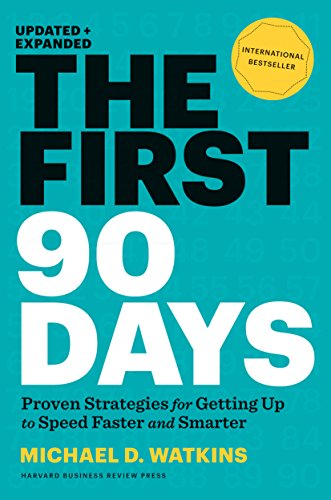
Michael Watkins’ The First 90 Days: Proven Strategies for Getting Up to Speed Faster and Smarter gives guidance on how to position yourself for success in a new role. While the target audience is new managers, he identifies challenges common to all new employees and provides a structure for recognizing and addressing the types of challenges that come with differing organizational contexts.

First off, why 90 days? The author posits that the first quarter is a good time to get judged, as people’s impressions and perceptions are starting to solidify. The faster you can get up to speed and move from a “transition” period to having ongoing positive impact, the better. Watkins recommends taking the following steps.

The index-card summary

  1. Out with the old assumptions and habits, in with the new skills

  2. Understand your business context

  3. Manage up: show your boss you can achieve their priorities

  4. Collaborate with your team

  5. Identify influencers

The detail

  1. Out with the old assumptions and habits, in with the new skills

    Leave behind old assumptions and habits tied to your old role. A new company has its own culture, dynamics, and norms. Focus on attuning your mindset and your skillset to your new role. Recognize that you will need to perform at a higher standard than your last role.

    To begin, construct a learning agenda in which you identify competencies to upgrade and skills to gain. Develop a learning schedule in which you summarize your learning needs. Then, figure out the best way to learn, including questions that you need to ask. Create a support network with mentors to support your transition.

  2. Understand your business context

    Identifying the business context you are operating in will aid you in identifying what will be valued in terms of activities and outcomes. Common business situations include Startup, Turnaround, Accelerated Growth, Realignment, and Sustaining Success — or STARS. Each situation will have a different emphasis on learning vs. doing, offense vs. defense, etc. and, thus, will differ in what must be done to secure an “early win”.

  3. Manage up: show your boss you can achieve their priorities

    You will need to establish credibility with your new boss. This means taking on your boss’ objectives and definitions of success as your own. You can then define goals relevant to your role and find opportunities to demonstrate your ability to achieve success by pursuing a few early wins.

    As you identify a path forward, it is your responsibility to keep your boss posted and ensure that expectations are communicated. No surprises is the best policy in working with your boss. You must also adapt to your boss’ style rather than assuming you can change them. Your relationship with your boss is your responsibility. By aligning on your priorities and defining your strategy, you can create a shared vision and establish a clear direction of progress.

  4. Collaborate with your team

    You must align you strategy and vision with your teammates. Assess their strengths and weaknesses, in a non-judgemental fashion. Establish the right structure for speed and effectiveness. Identify personal and team timelines for analysis and action planning. Don’t make decisions before you are ready.

    Develop a common language of communication. This will speed up action and remove misunderstandings.

  5. Identify influencers

    In an ideal scenario, you win the respect of people whom your boss respects. Beyond your immediate teammates, identify and understand the influence of indirect stakeholders, who may impact your goals.

The quick take

I like that this book focuses on what is in your control, and the importance of being proactive as well as receptive to the new environment. It’s worth underscoring that the most important thing you control is your mindset. What I am less convinced by are the tactical tips about quickly identifying all facets of success and converting them into an action plan. Watkins makes it all sound easy. The reality is, it isn’t always easy. In a new work environment, particularly the large ones, I’ve often found my senses on overload, not knowing what’s true vs. what’s marketing, and finding advice from different veterans inconsistent or even at odds. In the end we all have to make our own foundations by choosing how we define success in the context of our careers, beyond just a single job.