Guest post by James Wallace of extroverteddeveloper.com
You are responsible for your own career.
We’ve probably all heard that phrase before. You may have even seen some advice about what it means. I’ve found that most of that advice revolves around networking and visibility or self-advocacy.
Instead, today I’m going to write about what this means when it comes to decision-making.
Making decisions that serve your career
I am from a time in the computing industry when folks had offices and cubicles. We worked in pretty quiet environments and had a considerable amount of space compared to today. While generally I think it’s been a terrible descent into open office madness as an industry, I knew it was here to stay. So the question arose: How am I going to be successful and grow in my career in this new environment?
The evidence is pretty clear that open offices have been detrimental to overall knowledge worker effectiveness. (Hmm, I wonder if that’s why so many want to work from home?) And companies have largely left it up to individual employees to figure out how they’re going to thrive in an open office. That’s what I mean in this post when I say, your career is in your hands.
You might be thinking that when the companies took away our cubicles, it was then their responsibility to buy us headphones so we could continue concentration-heavy work. Some did. Most didn’t. So now what? What should you do if you find yourself in an open office environment, distracted by all the noise around you? By now I think the industry has landed on an answer: You should buy the best noise-isolating headphones you can afford. Why? Because it will increase your productivity, and a single promotion more than pays for the headphones.
Owning your career in a remote work world
We’ve entered a new era of change in our industry: the rise of remote work. Just like with cubicles before, there are some benefits, but also many costs to being fully remote. Who should bear the brunt of those costs?
In the office, the company provides the best possible internet service it can get. Further, it provides a fail-over internet service, just in case the first connection goes down, because everyone knows how important internet connectivity is for everything we do.
Now that you’re home, is the internet still as important? Is it more important, since it’s the lifeline you maintain back to the company? It seems to me that something so important, where if it goes down you can’t do your job, should be taken very seriously. As such, I have dual internet service providers at home: a fast fiber connection and a fail-over cable connection, along with an in-home enterprise grade wifi network. Because I was remote for 6 years, and the internet is how I made money for my family. The decision to make these investments was easy.
The next thing that’s dramatically different in a remote world: whiteboards have effectively disappeared. I have personally found collaborating at a whiteboard to be very beneficial. Turns out, there’s some great virtual whiteboard apps (Jamboard from Google, Whiteboard from Microsoft, etc.) that work great with an iPad and a iPencil. Another benefit of the latest iPad Pro is that it has very nice camera tracking, freeing you from having to worry about whether you’re in frame when on a video call. So… should you drop $1,000 on an iPad and iPencil to get team whiteboarding capability back? I did.
Invest in yourself and your own productivity, and if the company will reimburse you, great! If not, they’ll reimburse you with a promotion.
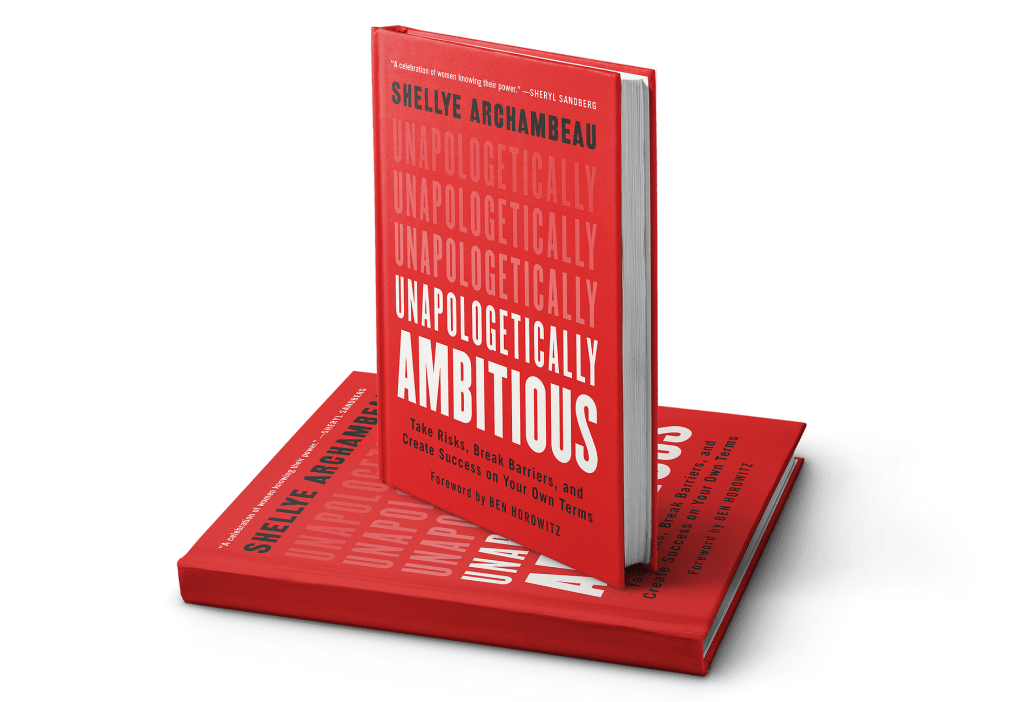
Her book is rich with 39 chapters of life decisions and insights. Across it, three key themes stood out:
Master your mindset
Prepare for opportunity
Learn from others
The Index Card Summary
Your professional success, Archambeau argues, depends on three self-guided processes:
1. Master your mindset
Archambeau believes three feeling are prerequisites to professional confidence: competence, autonomy, and relatedness. Competence is the ability to handle yourself no matter what arises. Autonomy is the confidence to make your own choices. And relatedness is feeling like you fit in. If you are missing any one of these three, you are more likely to withdraw from challenges. But if you have all three, you will feel prepared to set goals and reach them.
To feel competent, you must accept your circumstances while owning your agency. To feel autonomous, you need to know your values. Naming your values will give you a standard for decision-making. And to feel relatedness, you must feel empathy towards your teams while earning their respect and building alliances.
Your personal and professional cheerleaders can bolster all three elements. Cheerleaders can especially build your confidence in your own decision-making.
2. Prepare for opportunity
Once you’ve got the right mindset for taking action, you can set goals according to what you want and need, and make a plan to achieve them. But how does one make a robust plan with a good chance of success? Archambeau focuses on identifying patterns associated with power.
Archambeau knew in high school she wanted to be a CEO. She then made choices that minimized the friction for achieving her goal. She picked a growth industry — technology — that would offer more opportunities. And she looked for patterns to decode how her industry and roles worked. When she noted that executives are all great speakers, she joined Toastmasters. Throughout her whole career, she acquired skills and experiences common to top candidates. She also time-boxed her plans. If promotions were slow to come, even with her top performance, she looked for opportunities outside of her company.
But you can’t prepare for every possible workplace situation, and you can’t plan for the macroeconomic environment. So how does this advice jive with managing the unexpected? Archambeau recommends identifying worst-case scenarios based on the current environment. Validate your plan based on a clear fact base. After that, there’s no time for second thoughts! Once you begin to act, you can adapt to changing circumstances with creative problem-solving. To move with conviction, you must accept that your choices mean saying yes to one path and no to another.
3. Learn from others
There’s almost nothing new under the sun. So you might as well learn from someone who’s done what you’re trying to do. Ask someone who’s achieved what you’re trying to achieve for advice. Then following up on how that advice worked out. This is the simplest way to attract a mentor: make your ask small and share what the mentor’s advice yielded.
You will need to do the upfront work of networking to find the right people to ask for advice. At the same time, don’t limit your thinking about who can help support you in achieving your goals. Tell everyone you know what you’re trying to accomplish. Broadcast your intentions. This will keep you top of mind when opportunities appear.
Learning from others also includes learning from your team. Ask for help when you need it. And be willing to delegate. Embracing your limits will empower your team to take the lead when they are better placed to do so.
Requisites and truths
Each of the three key themes holds underlying requisites. Mastering your mindset requires you to know yourself — one of the hardest things to do for most people. This, for me, felt especially hard when I had limited work experience. Preparing for opportunity presupposes you buy into the institutions that dominate your industry. Archambeau recommends ‘finding the current’ of power and jumping in it. But if you disagree with the system, it will be hard to position yourself to move with it. And learning from others can be hard to balance against confidence in your own decisions. Not all advice is good advice, so how do you filter in only the good advice? In addition, garnering advice in the first place will be difficult if you haven’t learned how to network in a way that suits you.
Still, none of these caveats reduces the wisdom of Archambeau’s advice. Once you have your own inner foundation firm, decision-making will become easier. Preparing for the future you want can only aid you in achieving your ambitions. And finding sources of advice and support will put the wind at your back. This includes ‘micro-mentors’ — people willing to give timely advice — and supportive teammates.
Success, Archambeau notes, is a continuous process. If you’re moving in the right direction, every day is a success.
Five new realities and seven mindset shifts to get you work-ready
Source: The Cowl
Dear graduates,
You have amassed incredible book smarts in the last four years. Now it is time for you to build professional smarts. For me, as a first-generation Jamaican American, I didn’t have many examples in my private life of how to navigate the professional settings I ended up in — finance and strategy consulting firms. I had to learn that hustle, diligence, and many other things that I thought I’d learned in school all look quite different in a workplace. Below are five key differences I observed, and seven mindset shifts I had to undergo to effectively adapt.
Five new realities of how school differs from the workplace
1. The role of analytical skills
In school I gained the impression that I could think, plan, or brute-force my way into almost any opportunity I wanted. In retrospect, these tactics worked well because I was either undertaking something entrepreneurial, like starting a student group, or operating within a well-defined system, like a class scoring rubric. Most workplaces, by contrast, are somewhere in between. Systems are loosely-defined, with unspoken rules and silent expectations. Consequently, communication skills and other “soft skills”, like people skills and team collaboration, are more “make or break” than the analytical skills you learn at school.
2. The belief in objectivity
In academic courses, every attempt is made to set an objective grading rubric, to pre-define standards of what “right” is and what “good” looks like. While some companies try to come up with a trajectory map that emulates this specificity of standards, I have never seen one that wasn’t wide open to interpretation. Phrases like “produces consistent, high-quality work” on qualitative rating systems where the highest score is “exceeds expectations” are typical. These are vagaries layered on moving targets. Thus, it becomes your responsibility to manage not only your own performance and development, but also how you are perceived.
3. The idea — and relevance — of a “right answer”
When a teacher poses a question to a class, more often than not there is a right answer ready to hand. Not so in business. More likely than not, the question is being asked *because* there is no ready answer. In strategy consulting (which is essentially project-based problem-solving for companies), I’ve found there can be multiple, equally valid answers to a question. Which answer you should lead with is context-dependent. The expansive number of unknowns also means you can expect to be wrong more often in the working world. In finance, peers often told me “as long as I’m right more than I’m wrong, I’m in good shape” — and these were peers putting other people’s money and, thus, livelihoods on the line with their decisions. Still, they were confident enough to take action and take responsibility for the consequences.
4. How you engage with authorities
Without a right answer at the ready, and with a lot of subconscious expectations, many managers struggle to give explicit guidance. Instead, most managers provide general guidance and are prone to make corrections after the fact. It is up to you to figure out what you don’t know you don’t know, so you have a comprehensive understanding of your development areas and how to meet or exceed expectations. This requires you to build rapport with and learn from peers and authorities alike. You build rapport by taking an interest in how they operate and what you should emulate. Figure out how you can make your boss’ life easier and also how to gracefully communicate your and your project’s needs.
5. How you define success
In school, there is a fairly narrow path to “success,” defined by grades and how advanced or complex the subjects you study are. By contrast, career success is deeply individual. Choosing your major in college may seem overwhelming but is finite compared to the unlimited number of career choices you will have. These choices will be multifaceted. You will need to balance your goals, financial needs, passions, and strengths. Rather than be overwhelmed, you simply need to be informed about the implications of each choice for your future opportunities, and to accept that you may not have the exact perfect job all the time. Indeed, a perfect job may be mythical, as no one likes their job all of the time.
Seven mindset shifts to get “work-ready”
The above differences may sound straightforward on the surface, but they require a number of mental shifts to psychologically prepare for the working world. Below are seven “From / To goals” that will set you on a strong footing for your foray into the working world.
1. Thinking of work tasks as “assignments” → Big-picture thinking about team objectives
Rather than thinking of your tasks as things to tick off a list, you need to think carefully about how your work will be used. Questions you might ask yourself include: Who is using what I am making? What will they expect to see? Are there examples or precedents I need to model my work after? How much of this is custom content vs. standard content? How can I simplify things to make this immediately usable or actionable?
2. Perfectionism → Growth mindset
Rather than investing an infinite amount of energy into a project, you need to learn to invest the right amount of efforts to get the job done. There is no time to examine every alternative or to leave no stone unturned. This means you have to let go of any fear of being imperfect or wrong, as you calibrate with and for your team or client.
3. Expecting a roadmap → Learning to navigate
While there may be a few examples to learn from that help you make a preliminary plan or guide for your work and career, some aspect of your work will include uncharted territory. You will have to develop the skill of navigating as you go, in a way that progresses your objective as new information becomes available.
4. “Big reveals” → Bringing people with you as you produce work
Just working hard won’t necessarily win you appreciation or reward. Hoping people notice your work without sharing your progress or involving others also leaves you at risk of going in the wrong direction. Rather than revealing all your hard work when it’s done, validate your approach with your boss and pick up tips from your peers along the way. Involve your team in your journey.
5. Assuming people think like you → Listening to and managing people
Eliminate the word “should” from your vocabulary when thinking about others. Empathy is your most powerful tool for understanding coworkers and managing your boss, your teammates, and other co-workers.
6. Thinking a role is too good or not good enough → Focusing on learning and strong execution
Knowing how to execute simpler tasks inside and out means you will be competent enough to teach others and to find efficiencies. Taking on “stretch roles” that are beyond your current experience or knowledge is equally important. Don’t be afraid to take informed risks. Be confident in your capacity to learn, adapt, and step up.
7. Always sticking it out → Recognizing if an environment is unhealthy or just a bad fit
Only you know your tolerance-level for unhealthy work environments, which, unfortunately, there is no shortage of. If staying is important to your next professional or financial goal, you may stick out a job with a terrible boss or insane hours for several years. But notice how it’s impacting your sense of confidence and sense of self, and consider if there are alternatives that get you to the same place. And make sure you find a mentor or peer to talk it out with.
With that, class of 2020, I welcome you to the “real world.” I wish you a strong start, many adventures, and the confidence that comes with knowing that all of my friends from school have pretty much found their happy places.



 MBA in the City