What it really means to be responsible for your own career

Guest post by James Wallace of extroverteddeveloper.com

You are responsible for your own career.

We’ve probably all heard that phrase before. You may have even seen some advice about what it means. I’ve found that most of that advice revolves around networking and visibility or self-advocacy.

Instead, today I’m going to write about what this means when it comes to decision-making.

Making decisions that serve your career

I am from a time in the computing industry when folks had offices and cubicles. We worked in pretty quiet environments and had a considerable amount of space compared to today. While generally I think it’s been a terrible descent into open office madness as an industry, I knew it was here to stay. So the question arose: How am I going to be successful and grow in my career in this new environment?

The evidence is pretty clear that open offices have been detrimental to overall knowledge worker effectiveness. (Hmm, I wonder if that’s why so many want to work from home?) And companies have largely left it up to individual employees to figure out how they’re going to thrive in an open office. That’s what I mean in this post when I say, your career is in your hands.

You might be thinking that when the companies took away our cubicles, it was then their responsibility to buy us headphones so we could continue concentration-heavy work. Some did. Most didn’t. So now what? What should you do if you find yourself in an open office environment, distracted by all the noise around you? By now I think the industry has landed on an answer: You should buy the best noise-isolating headphones you can afford. Why? Because it will increase your productivity, and a single promotion more than pays for the headphones.

Owning your career in a remote work world

We’ve entered a new era of change in our industry: the rise of remote work. Just like with cubicles before, there are some benefits, but also many costs to being fully remote. Who should bear the brunt of those costs?

In the office, the company provides the best possible internet service it can get. Further, it provides a fail-over internet service, just in case the first connection goes down, because everyone knows how important internet connectivity is for everything we do.

Now that you’re home, is the internet still as important? Is it more important, since it’s the lifeline you maintain back to the company? It seems to me that something so important, where if it goes down you can’t do your job, should be taken very seriously. As such, I have dual internet service providers at home: a fast fiber connection and a fail-over cable connection, along with an in-home enterprise grade wifi network. Because I was remote for 6 years, and the internet is how I made money for my family. The decision to make these investments was easy.

The next thing that’s dramatically different in a remote world: whiteboards have effectively disappeared. I have personally found collaborating at a whiteboard to be very beneficial. Turns out, there’s some great virtual whiteboard apps (Jamboard from Google, Whiteboard from Microsoft, etc.) that work great with an iPad and a iPencil. Another benefit of the latest iPad Pro is that it has very nice camera tracking, freeing you from having to worry about whether you’re in frame when on a video call. So… should you drop $1,000 on an iPad and iPencil to get team whiteboarding capability back? I did.

Invest in yourself and your own productivity, and if the company will reimburse you, great! If not, they’ll reimburse you with a promotion.

Congraduations!

By guest contributor Jim Wallace

From the classroom to the boardroom, how to prepare for the modern office

You’ve done it! Today is your day. You’ve finally graduated and are ready to make your mark on the world, and here at MBA In The City, we’ve got your back. It was not too long ago we too first stepped foot into corporate America, and today we’re going to impart our hard won wisdom to you and your graduating class of [insert year]. Yes just for your class.

After four years of philosophical debate about the deepest problems of society, you may feel some mild existential dread about joining a traditional business. Rest assured, the rumors you’ve heard are wrong; the workforce isn’t a soulless cubical landscape as far as the eye can see. It’s actually a soulless, open plan landscape as far as they eye can see or, more importantly, as far as the voice can travel. Modern offices are very good at optimizing for the bottom line. That means you have to be good at optimizing your own productivity. To do that, you’ll need some important equipment.

Micro-climate management

With air conditioning as a staple of the modern office, you may have assumed that we have conquered the temperature variations that plagued our ancient ancestors of the 1900s. The modern office instead brings a taste of adventure that appeals to its diverse and outdoorsy millennial talent base. Moving from place to place in today’s office is a journley through all of the climates on earth. One minute you’re in an jam-packed conference room that is slowly approaching the temperature of the sun. The next minute you’re on an arctic adventure, exploring the landscape that is the vast openness of the sea of monitors. To make sure you’re spending your energy working and not shivering or sweating, we recommend layering for the extremes.

Whether joining a meeting or working at your desk, every day you’ll need a few key garments for work.

  • Nice lightweight blouse or button-down shirt

  • A sweater or sweatshirt

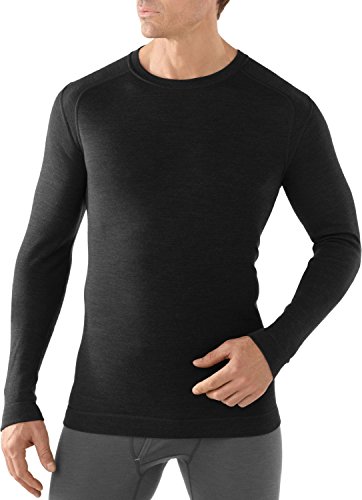
  • A smart wool undershirt (250 gram)

  • A heaver smart wool undershirt (400 gram)

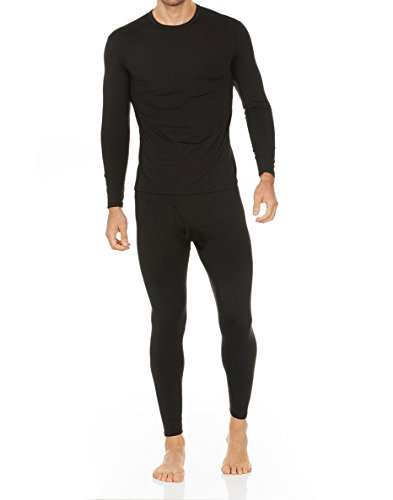
  • Long johns (especially in the summer)

  • Ski pants

  • A parka

  • Space heater

Bring your own toilet paper

In the competitive global economy we operate in, businesses must maintain their profitability by watching costs down to the cent or, as it were, the sheet. Niceties like two-ply toilet paper are just not in the budget. If companies splashed out on plush TP, how would they ever pay for the carefully engineered executive compensation packages? Work hard, and it may one day merit that coveted two-ply, and a promotion. Yes, just like school, promotion is merit-based, as our corporate leadership demographics point to. And executives have clearly been working harder and harder year on year, as CEO pay has continually increased over the past 30 years as a multiple of median employee salary. We need to support our fearless leaders and their personal sacrifices with multi-million dollar salaries, especially if the company is failing. You can remember with every wipe that your sacrifice is matched by theirs. But, if you like to wipe in style, add toilet paper to your supply list.

And with all the kit you’ll need, it’s time to think about how you’re going to store it.

Have the right bag

With hot desking and the general dearth of personal storage space that characterizes the modern office, you might be wondering where all your personal items will live at work. And at the same time, as the boundary hours of work life and home life blend, you’ll need to adjust the inventory you tote accordingly. Here’s what you’ll need on hand throughout your day:

  • Laptop computer

  • Charging cables, including

    • USB A to micro USB

    • USB A to mini USB

    • USB A to Thunderbolt

    • USB C to USB C

    • USB A to USB C

  • Laptop charger

  • Backup battery

  • Gym clothes

  • Water bottle

  • Locker lock

  • Full toiletry set, including toilet paper

  • All the professional clothes above

  • Office supplies, including

  • Pharmacy staples, including

    • Advil

    • Cold medicine

    • Vitamins

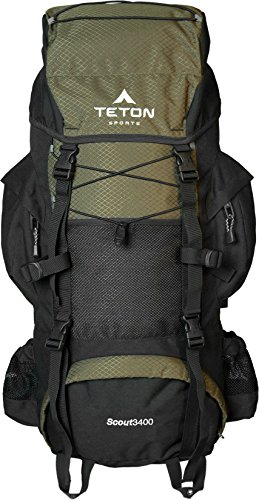
It’s a lot to carry, but we have good news: finding the right bag will actually require very little adjustment. Since you’re already used to wearing a backpack at school, you just need to upgrade to adult-sized gear.

Always eat before an event

We have observed a mathematical law that corporate events provide an amount of food equivalent to:

where x equals the number of employees who have RSVPed to the event. Thus, the per person allocation is ever decreasing as the size of the company and event increases. You can expect a full burger at a startup, a slider at a mid-cap company, and a meatball at a large company affair.

How to create a private space

 B

Most offices have plenty of conference rooms — that are always double-booked. These days glass walls are in, thanks to execs like Zuck taking the desire for transparency very literally. But if you’re a lactating mother or taking that doctor’s call about your infection status, you may not want to be on display. You could carry a “do not enter” sign to hang on the bathroom, which is now the most private space you will find in your building (It worked for Zack Morris!). That does feel a little budget though. Not to worry, Hushme has a solution for you: a noise canceling mouth-piece. So does BloxVox. You will look like Bane from Batman, but it gets the job done.

On the flip side, your peers may not have cottoned on to new privacy tech, and you may find yourself listening to messy divorces from spouses who don’t understand who their new family is.

Final thoughts

This is a starter guide, and doesn’t cover every contingency. So you will need to stay on your toes out there. I once worked at a company that was trying to win an office design award. To enhance their clean aesthetic, they took away all of the trash cans. As localized trash mountains began to collect, I realized it was time to improvise. I purchased a purse hook to hang a small plastic bag from my 3-foot-squared desk space as my new trash. The company was so inspired by this grass roots solution that they bought everyone branded purse hooks to use for their own trash! They did not provide bags though.

Oh, also, open offices can be kinda noisy. You should get a nice pair of headphones.