May the ranked choice be with you, New York!

NYC is rolling out ranked choice voting for key city offices.

This June, New York will be the largest city in the U.S. to roll out a new* voting system that is regaining popularity: ranked choice voting. But what’s the big deal, you might ask. How is this better than our old system? We here at MBA in the City will explain it the best way we know how: with Star Wars.

*New unless you live in Ireland, Australia, San Francisco, France, Finland, or many other countries.

How rank-choice voting brings balance to the force

Every election it’s the same old choices: Jedi or Sith. You’d love to vote for a Droid candidate, but they always meld into the Jedi party, so as not to split the vote. It’s the strategic best thing to do, but you end up choosing between the lesser of two evils instead of a candidate who really represents your priorities. But something new is stirring in Tatooine. This election will be ranked choice voting.

A more diverse candidate pool

Suddenly, instead of the usual two candidates, there’s a half-dozen campaigning. A lot of fringe candidates have been emboldened to discuss their ideas. The Mandalorian party are usually the swing voters and have some intriguing ideas about “the way”. The Tusken Raider party is arguing for a wholesale shift in property rights. To your delight, among the new candidates with unique platforms is your true favorite, R2-D2. He’s running on a clean energy platform, pushing for universal free electric vehicle and droid charging.

Incentive for civil discourse and coalition-building

The debates took a notable turn this year. You’re used to some severe name calling in the thick of the Clone Wars, but the tone is remarkably civil. You think the Sith realized that slander will alienate the Mandalorian voters, and the Jedi and Droid parties are at least hoping to be each other’s supporters’ second place. The Jedi and Droids even ended up cross-promoting each other in campaign speeches, urging for voters to give their second choice to their competitor.

Invitation to express true preferences

Often you only vote on close elections. If the race is tight, you vote for Jedi, since the Sith alternative is so horrible. And if the election isn’t close, you don’t bother voting at all, since you already know the likely outcome, and your preferred party still won’t win. But under ranked choice voting, all the closet Droids supporters have a chance to make their voices heard without risking a worse election outcome.

This election day is different. You feel true motivation to vote. You rank Jedi second, knowing that as candidates are eliminated, your vote will transfer to your next preference.

In a galactic republic, every vote should count not just be counted

No vote should be a “thrown away” vote in a galactic republic. And this election, you cast your underdog vote knowing that for the first time, this is truly the case.

Election night is a true nail-biter. In the first count of first place votes, Droids take the lead with 27% of the vote, higher than you could have ever guessed. As the Tusken Raiders come in last with 4%, their redistributed votes bring the Sith into the lead in the second count. But when the Mandalorians are eliminated, the vote becomes overwhelmingly Jedi.

While Jedi are a more neutral and traditional choice, they acknowledge the success of the Droid platform in their victory speech. In the following months, the strong Droid vote leads the Jedi to adopt multiple pro EV policies.

Stories as real as reality

Everything in the above anecdote is based on real-life events from ranked choice voting elections in the U.S. The 2013 Minneapolis mayoral election launching that ranked choice voting was famously diverse and polite, with 35 candidates running on a congeniality contest. And the 2002 San Francisco mayoral underdogs campaigned by co-endorsing each other, only to lose to the centrist incumbent.

But those are the tales of other cities. And it is time for New York to write its own story. So read up on our candidates! Good luck, and happy voting.
How to ranked choice vote in NYC

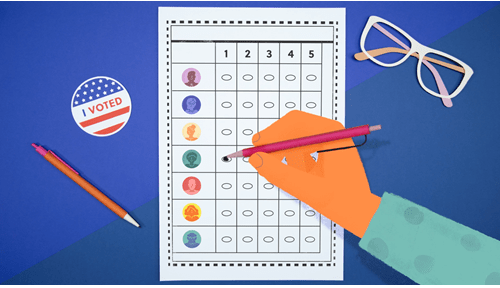
Number candidates in order of preference, where first place is your first choice.

If your vote cannot help your top choice win, your vote is transferred to your next choice.

Last place candidates are eliminated, and their votes are transferred until one candidate receives the majority of votes.

Note: Don’t feel obligated to rank all five candidates. Just pick anywhere from one to five people you like.
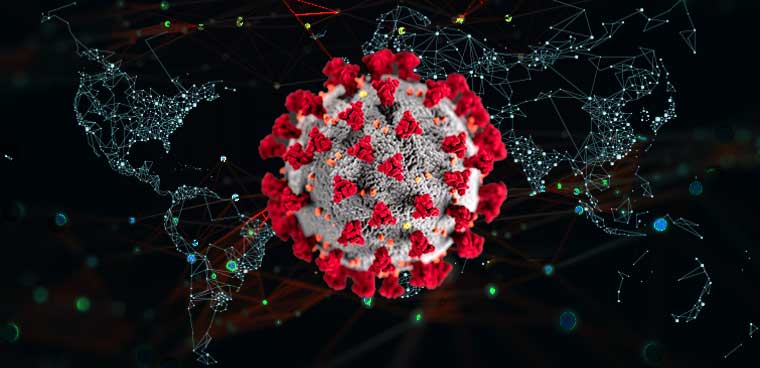
Top five post-COVID-19 predictions

How will COVID-19 leave society changed?

New York’s new normal

Each day as I step outside, keeping at a social distance, I am reminded of how not normal New York City life is right now. Empty sidewalks, save for the homeless and a few runners. Wary looks behind masked faces. Empty roads and fresh air. Supply shortages and long grocery store lines, for those who brave them. A sudden interest in the movie Contagion. This is the new normal. And when this passes, I wonder, what will the new new normal look like? I offer five predictions about how society, government, and individuals will change — or not change, as the case may be:

  1. Niche media will become more mainstream than mass media
  2. Everyone will emerge with a new survival skill
  3. Asthma cases will drop, as the air quality improves with less pollution
  4. Both parties will take the crisis as evidence that their principles are the right ones
  5. Social activism will see a significant jump

I predict these changes, because they are already underway. Here’s what I’ve observed in the last few weeks of quarantine:

1. Niche media will become more mainstream than mass media

John Krasinski and Steve Carell, Some Good News, Episode 1

In the early days of corona virus news, national “reporting” was a loose term — you could read article upon article and learn almost nothing. As the severity of the situation became clear, hand-wavy vagaries just weren’t enough to keep us informed about how to stay safe. My peers and neighbors quickly started relying on a narrower set of localized and trusted sources for the intel we needed on the pandemic. The Daily by the New York Times became the most pervasive, providing a combo of expert advice and front-line reporting. As New York became the epicenter of the U.S. outbreak, and no national support emerged, Gothamist emerged as one of the best sources of informative and actionable coverage. They gave locals a source of food security by reporting on Baldor, a restaurant supplier turned direct-to-consumer, with higher quality and better prices than anything on Instacart. The TLDR from national news outlets, by contrast, was just ‘food is getting harder to buy… countries should do something about that.

The same-y-ness, shallowness, and sensationalism of mainstream news has spurred other niche counter-movements in media. Some Good News with John Krasinski has brought the local global, featuring positive COVID-19 stories of hope, solidarity, and recovery from around the country and the world. He’s married curated, hand-made content contributions with global icon pop-ins, notably Steve Carell and Lin Manuel Miranda. At 16 million views for Episode 1, SGN’s popularity has blown every prime time show out of the water. In effect, channels like SGN are making YouTube more mainstream than ABC or CBS.

2. Everyone will emerge with a new survival skill

First quarantine-inspired, homemade bread

All the twenty-somethings of New York have discovered their kitchens, perhaps for the first time, as take-out has become more of a luxury than a norm. “I’m confident we can survive the apocalypse now,” my husband smiled, with a sigh of relief, when our 50-pound flour order arrived from a Queens wholesaler. He made his first-ever homemade bread. I have picked up running and stair climbing in lieu of a gym, and could easily make it to any bridge of the island if needed. All we need now is to take some streaming karate lessons, and we will be ready to kick some zombie butt if a worse kind of outbreak happens.

3. Asthma cases will drop, as the air quality improves with less pollution

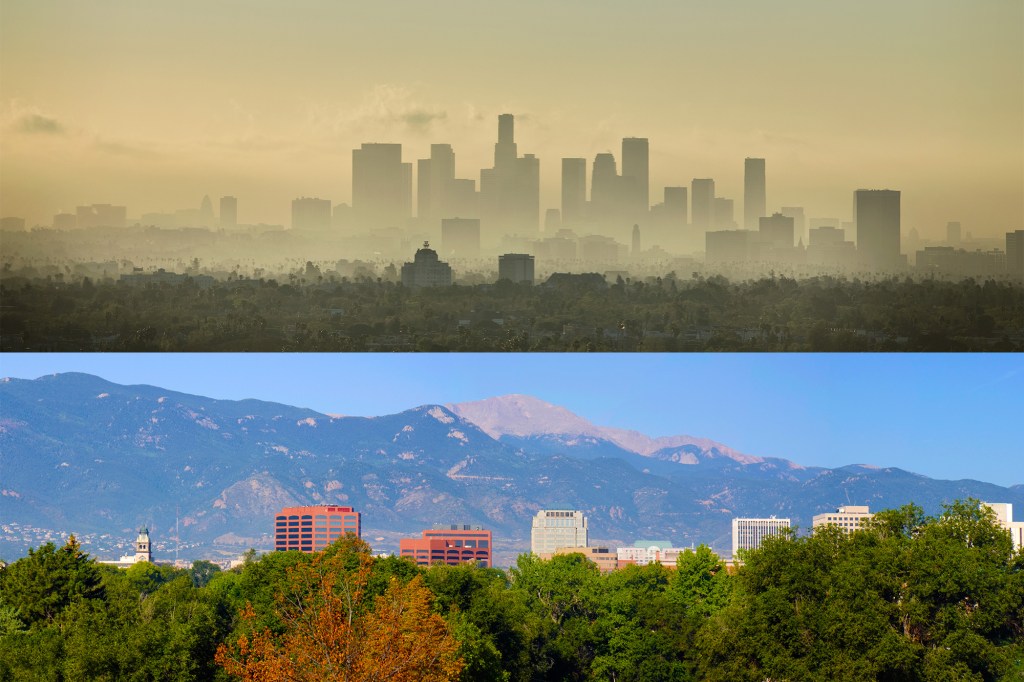
U.S. cities with the best and worst air quality, Realtor.com

Few cars on the road and planes in the air doesn’t just mean we can wander the streets and tarmacs unfettered. It means we can breath deep and feel refreshing, mountaintop-quality air, even in the middle of New York City. This can only be positive for children as they develop. As an urban-dweller who developed chronic rhinitis at a young age, I can’t remember what normal breathing feels like. While some argue impaired smelling is a benefit in New York City, I still hope young New Yorkers today continue to reap the benefits of our reprieve from pollution. In a dream world, we would mandate the sunset of combustion engine vehicles and allow only electric vehicles within city limits. I won’t hold my breath for New York to be the vanguard of new clean air policies, but maybe California can pave the way.

4. Both parties will take the crisis as evidence that their principles are the right ones

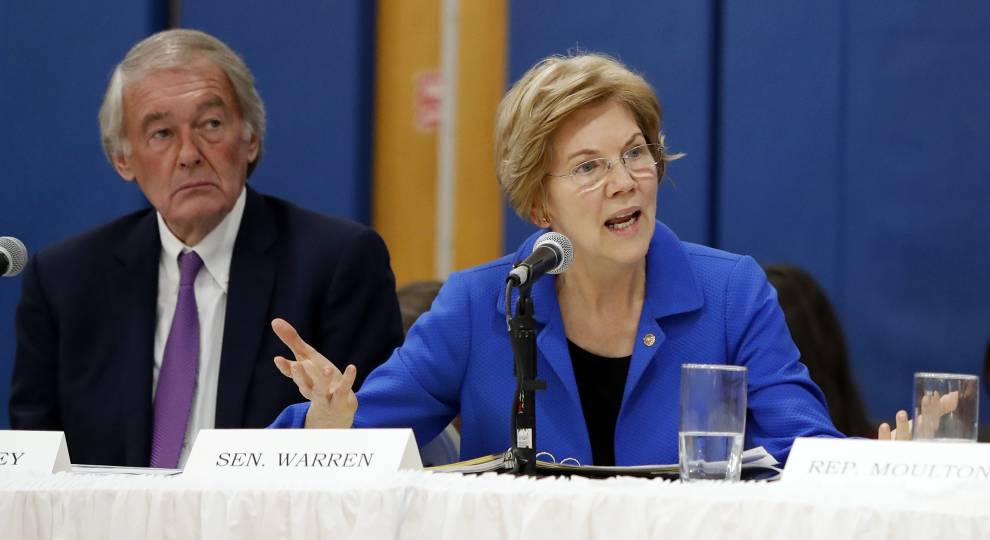
Massachusetts Senators Ed Markey and Elizabeth Warren, WGBH

In response to the coronavirus crisis, Republicans and Democrats alike have taken refuge in their respective ideologies. Conservative groups have mobilized to demand that the U.S. re-open the economy, while liberals have reminded us that people *are* the economy. The GOP’s economy-before-people stance has led to a temporary demand for big government, but no significant shift in their social safety net policy stances. Democrats, by contrast, consider this crisis as evidence that our safety net policies are already far too weak. While the 2020 election campaigns are essentially on hold for now, I expect to see renewed campaign efforts in the fall that will amount to a battle of ideologies for what we want post-COVID-19 America to look like.

5. Social activism will see a significant jump

Change.org highlights COVID-19-related petition victories

This crisis has led to a number of spotlights on companies and institutions reaping concentrated benefits while trying to pass on the pandemic’s costs to the larger populations they serve. WeWork is still charging tenants in cities with shelter-in-place orders. Amazon fired a protesting employee who called out unsafe working conditions following a streak of in-warehouse COVID-19 cases. When the stakes are life and dealth, right and wrong become fairly black-and-white. It also gives people more to fight for. We’re seeing more masses of people taking action. Millions have signed petitions through Change.org, and many more are organizing and making their voices heard. I expect this momentum to continue as the aftershocks of the crisis continue to reverberate.

Predictions unfurled

For better or for worse, this crisis will have a long tail, not just through the presence of the virus, but also in how our society is changed by the crisis. The five trends above are already under way, and will build as we adapt and reshape our social systems in the wake of COVID-19.