How bad is it? A methodology for managing mistakes

The cost of perfection is infinite. So how do you right-size your efforts when you have a high quality bar but limited resources?

We’ve all had the impulse to work on something for just a little bit longer. Perhaps late at night or after some rapid edits, you have the nagging pull to check your work for the fifth or sixth time. Perfectionist polishing has its own magnetic field. Whether its fear of finishing or fear of failure, we can feel foibled by our own human fallibility. I have been known to struggle against my physical limitations — eyes bleary, brain no longer absorbing all the details. My body tightening at the thought that after all this effort, I still might — *gasp* — make a public mistake!

The burn and burden of perfectionism can arise in any org, leaving many asking, “At what cost?” Besides weighing you down with excess mental baggage, these moments consume focus, crowding out space for broader impact beyond the one deliverable. Is it worth your health, your sanity, to pursue the impossible goal of perfection? Eventually I realized that my answer is no. I committed to rationalizing my efforts. Afterall, not all errors are created equal. Mistakes are inevitable. It was up to me to learn how to deal with them. So I came up with some heuristics. It began with learning to assess the impact of a mistake. And it ended with learning to calibrate to my context. I dig into both steps below.

Step 1: Understand the impact of your mistake

Early in my career, I attacked every error with the same level of ferocity, whether it was a formatting error or a forecasting error. When I finally realized I need to draw boundaries, CGP Grey ‘s taxonomy of mistakes provided a starting point. Grey takes a structured look at mistakes, defining types and matching the best responses to each:
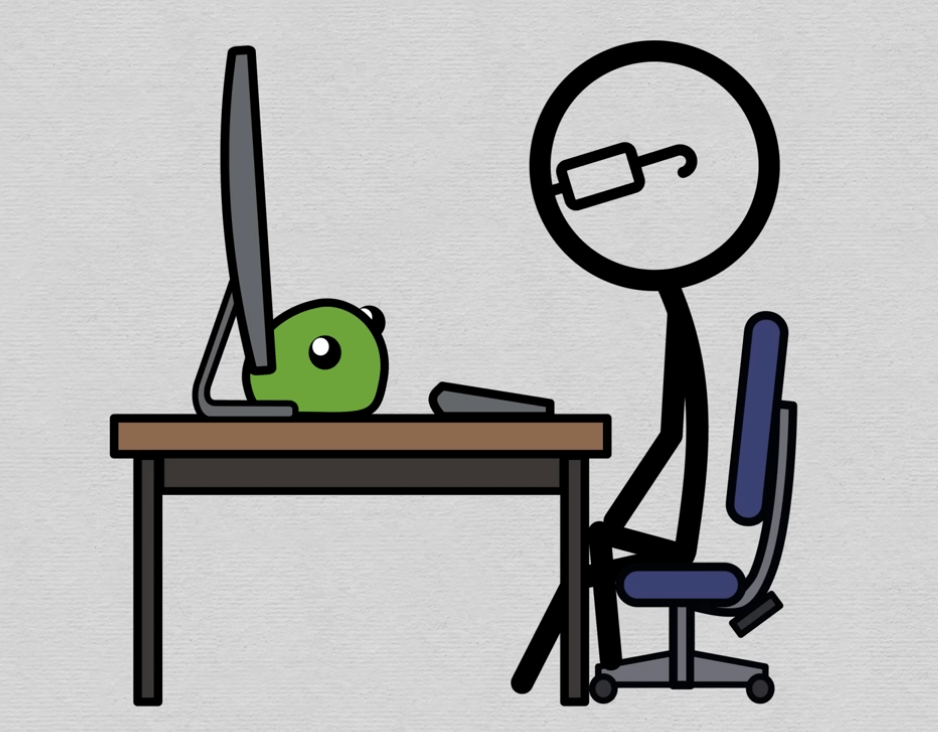
CGP Grey’s “Menagerie of Mistakes” (from timestamp 14:15) categorizes the big and the small, starting with glitches — mistakes that are good at blending into the background. Source: CGP Grey was WRONG

Glitches and Blunders

Glitches are mistakes that are good at hiding in plain sight. Blunders are embarrassing, visible, but still harmless mistakes (think Bushisms). Glitches and blunders become more common the more you have to do — putting on a sweater backwards before you rush to work, calling someone by the wrong name after you’ve just met a dozen new team members. These are worthy of grace, of laughing it off.

Errors of all varieties

Errors range from the trivial to the significant, and are more varied in how people perceive size, importance, or even if there’s an error at all. Grey playfully names their species, including:

  • Error Trivialis
  • Bad Takeus
  • Technically Correctus
  • Error Factualus
CGP Grey’s “Menagerie of Mistakes” (from timestamp 14:15) describes different error types. Source: CGP Grey was WRONG

Notably, every error requires a judgment call, weighing the cost of fixing the error vs. the benefit of moving on. Unless, that is, you make a catastrophic error — one that fundamentally breaks what you’ve made. They demand a do-over, a recall, or some equivalent.

Step 2: Calibrate to your context

Grey’s mistake taxonomy leaves the critical last mile to the audience, using one keyword to back out of any specific guidance: “perceived.” As political strategist Lee Atwater famously stated, “Perception is reality.” As such, I’ve learned to consider what I perceive, what my stakeholders perceive, and how to mediate between the two. Said another way, three pieces of context guide my error response: my objective, the work’s development stage, and organizational expectations.

Know your objective

Your primary goal should inform what kinds of mistakes are acceptable. If you’re a history teacher, for example, factual errors would undermine the entire endeavor, whereas technically correct errors (e.g. omissions) are necessary to manage class time constraints.

My objective in this blog post is to help ease the mental burden of navigating uncertain expectations in one’s career. Thus, while I can’t afford a bad take, I may well make some trivial errors without impacting this post’s clarity, accessibility, or truthiness. In setting your own boundaries and standards, you tap into your own intrinsic motivation — which leads to better work.

Adjust to the stage of development

As work goes from concept to finished product, it’s rarely worth aiming for perfection until the clear shape of what you are driving towards emerges. In copy editing, for example, editors target attention towards one focal problem to solve per editing round — nailing the story, then nailing the flow, then word choice. Trying to do all three at once tends to fragment attention and drive anxiety born of ineffective strain. Rather than wasting attention, I’ve learned to focus it and let go of certain errors before their time has come to be addressed.

Calibrate to your organization’s expectations

Almost more important than whether you correct a mistake is agreeing with those impacted about how to manage mistakes. As we noted above, mistake tolerance is highly subjective and varies by industry, organization, and team. Some optimize for speed and fast feedback, allowing mistakes to abound in support of rapid iteration. Some are highly image-conscious and demand perfection as a proxy signal for competence and trustworthiness. Notably, the latter is not a sustainable strategy; such organizations are often marked by high turnover (e.g. management consulting).

Regardless of your org culture, set expectations. Have discussions early and often about what your colleagues need and expect from you. Understand how much they want to co-create versus review polished work. Convey where you are in the development process. Gauge whether your teammates can engage with ideas before they are fully fleshed out. Whether you agree or not with your colleagues preferred approach, knowing is half the battle.

Mistakes will be made

Cringy as mistakes may feel, Grey gives us a reality check: “If you make things, there will be errors.” Unless lives depend on it, there is no truly “right” or “wrong” approach to managing mistakes. What matters is that you have one.

The Index Card Summary of “The Five Dysfunctions of a Team”

The Five Dysfunctions of a Team is Patrick Lencioni‘s New York Times Best Seller for a reason: any team member can see themselves in this list of foibles.

Each of the five dysfunctions require leadership interventions to solve. Below is a brief summary of what that entails.

The Index Card Summary

1. Building trust

What. The foundation of a functional team is trust: confidence that peer intentions are good, that there is no reason to be protective around the group. Trust minimizes second-guessing and makes it easier to ask for help.

How. Create shared experiences over time, and understand unique attributes of team members. Team-building exercises, discussing team effectiveness, 360 feedback, and team leader role modeling can all drive the psychological safety and honesty needed to engender trust.

2. Addressing conflict

What. All relationships require productive conflict to grow. Without direct, content-focused conflict, teams can be handicapped by back-channeling and personal attacks that doom people to revisiting issues endlessly without resolution.

How. Acknowledge that conflict is productive; agree that impassioned debate is welcome. Ask for permission to address conflicts for the good of the team.

3. Driving commitment

What. Commitment requires both clarity and buy-in. Desire for consensus and/or certainty can weaken commitment and delay decision-making which, in turn, can paralyze teams and weaken their confidence.

How. Drive alignment through tight information cascades, close to the time decisions are made. Reduce ambiguity by setting intermediate deadlines. Address fears with contingency plans or worst-case-scenario analysis. Normalize decisiveness starting in low-risk environments. Leaders must also role model commitment by being ok with wrong decisions, asking for commitment, and reducing emphasis on certainty or consensus.

4. Welcome accountability

What. Peers need to welcome peer call-outs on actions that might negatively impact the team or actions others should model and amplify.

How. Leaders can enable and normalize peer accountability through setting agreed upon standards and goals, encouraging peer feedback, and giving collective team rewards for collectively modeling the right behaviors.

5. Focus on results

What. Time-bound, outcome-based performance drives business success. Yet it can often be crowded out by team or individual status or focus on survival.

How. Define specific target results that you publicly commit to, and reward only supporting actions; tie compensation to outcomes. Leaders must also reinforce a focus on results; if the team leader shows they value and reward other things, teams will react accordingly.

Disconnects and Through-lines

Unpacking the “How”

While Lencioni provides excellent tactical suggestions for tackling the numerous team dysfunctions, he spends too little time exploring where to start. While ‘absence of trust’ is named as the foundational problem, I think the easiest place to start is at the top, with the most visible problem: ‘inattention to results.’ Once you have specific results targets, you can drive accountability, which then motivates commitment, and so on down the pyramid.

Addressing the foundational dysfunctions, ‘fear of conflict’ and ‘absense of trust,’ is admittedly more challenging. In large organizations especially, cross-functional teams may not even conceive of themselves as teams and, thus, may see little benefit to engaging in conflict and little need to build trust. In those instances leaders play an even more critical role. Leaders with a longer-range view will be mindful of the personal costs of these more insidious dysfunctions: energy poorly spent, low morale, and high unwanted turnover.

Across the five dysfunctions, communication and leadership sit at the center of many proposed solutions. Spending more team time together drives trust, can root out conflict and reduce confusion. Documenting decisions and desired results and rapidly sharing and reinforcing them keeps teams in sync. And leadership modeling the right behavior and taking challenges head-on can inspire healthy team culture. These are all reasonable tactics to pursue, but side-step the issue that so much rests on leadership, especially the larger an organization gets.

Addressing the “Why”

Lencioni claims that “teams succeed because they are exceedingly human.” But realistically, it is equally why they fail. Humans are full of bias and are often more focused on their individual experience over organizational goals. Thus, even if an organization starts with a high-functioning team culture, it’s hard to scale; heterogeneity via sub-cultures is normal the larger an organization gets, and cultural drift is equally normal through turnover, changing external contexts, and organizational evolution. With this in mind, it makes more sense to think of high functioning teams as a practice to commit to rather than an end state. Like so much of life, it’s a journey, not a destination.

Source: aspitzer.com

Out with the old: How to make resolutions you’ll keep

We’ve all heard that the journey is more important than the destination. And the most important part of the journey is the next step. But how does this apply to New Year’s resolutions? Below is a simple guide to nixing the lofty end-goals and re-centering around continuous improvement.

Your brain on resolutions

Run a marathon. Learn beginner guitar. A classic resolution names exactly the outcome you want. It gives you a mountain to climb, literally or metaphorically. While it’s nice to have a vision to work towards, these kinds of goals can often have negative psychological effects.

First, lofty goals can dampen your self-esteem. When you set a goal, you place yourself in an immediate state of failure, by definition. And since most resolutions relate to self-improvement, this may provoke feelings of inadequacy. Second, we are particularly susceptible to “false hope syndrome” when making resolutions. A variant of the planning fallacy, we can assume that achieving a goal will be easier or faster to achieve than is realistic. When reality sets in, we give up or experience de-motivation.

False hope syndrome is characterized by a person’s unrealistic expectations about the likely speed, amount, ease and consequences of changing their behavior.”

Mark Griffiths, Psychology Professor, Nottingham Trent University

Third, a narrowly-defined goal may lead to de-motivation once we achieve the goal. We can mentally disconnect the goal from its underlying aspiration or principle. That’s why most dieters quickly regain all their lost weight, and then some. People who decide to adopt a healthy lifestyle, by contrast, often sustain success.

But how do you hold yourself accountable for self-improvement without a resolution? By changing your mindset to focus on the journey. That means prioritizing continuous improvement over specific milestones.

“No plan survives first contact with the enemy.”

Tim Harford, Author of Adapt: Why Success Always Starts with Failure

From resolutions to themes

For the last few years I have swapped out resolutions for annual themes. C.G.P. Grey describes themes as something you want more of in your life, a principle that you will use to make decisions. For me, last year was the “Year of Intentionality.” I wanted to do fewer things better. I wanted to avoid weaker interests that might crowd more important areas of my life. This theme gave me the grace to “Marie Kondo” my life. I said “thank you and goodbye” to the things that I like doing but didn’t have space for. And pandemic not withstanding, this was my most successful New Year’s resolution yet.

C.G.P. Grey explains how to make an annual theme that supports your growth.

From planner to navigator

It’s an unpredictable world out there. Having detailed life plans that you regularly scrap or revise can feel like a waste. Of course an initial plan can provide a valuable starting place. Plans can help you test assumptions and approaches. And the goal you are mapping towards can give you an inspiring vision and a sense of urgency. But the scale of the plan directly relates to the probability of success. A plan to get from your couch to the front door is more likely to succeed than a plan to get from your couch to Times Square, which depends on whether your E train became an F or your Q became a 2 train.

“Plans are useless, but planning is indispensable.”

General Dwight D. Eisenhower

If resolutions are truly meant to help improve your life, themes are much better suited to the job. They provide clear decision-making principles that enable you to plan your next step, no matter what life throws at you. And because the locus of control is with you, in a year’s time, you will look back and see visible growth.

The Index Card Summary of “Ultralearning”

Anyone in the working world today knows that life-long learning isn’t just an option anymore; it’s a necessity. From “new math” to new job categories, technology and bleeding-edge research will continue to keep any working person on their toes, lest we become irrelevant. (We all have that elder relative still using yahoo mail or, *gasp*, AOL…) Fast changes in tech mean we need to be fast to adapt, too. We need to be able to learn new skills pretty quickly. We need to be, in the words of Scott Young, “ultralearners”.

Building on the Deep Work concepts of intensity of time investment and focus, “Ultralearning: Master Hard Skills, Outsmart the Competition, and Accelerate Your Career” goes into the an arsenal of tactics that, when deployed, can rapidly accelerate skill acquisition. These are boiled down below into five key steps.

  1. Make a plan
  2. Learn in context
  3. Drive retention
  4. Collect feedback
  5. Experiment

1. Make a plan

It is hard to learn in a targeted way without a specific goal in mind. Equally, it is hard to retain what you’ve learned if you don’t have a plan for exercising your knowledge. Thus, efficient learning requires you to have a clear picture of why you want to learn a skill, what your learning plan will consist of, an approach for how you will learn, and a plan for when you will exercise and maintain the skill once it is developed.

2. Learn in context

Young advocates for “directness,” or learning tied closely to the context you want to use it in. This method ensures that your learning will directly translate to real-life application.

3. Drive retention

Retention requires over-learning the most critical aspects of a skill, and then repeating exposure over time to make it stick. This will initially demand sustained focus, followed by re-enforcement with drilling and retrieval practice. Near-term learning is honed through drilling specific aspects that will aid performance. Long-term learning is enhanced by practicing retrieval of information, rather than passive review.

4. Collect feedback

Feedback can be outcomes-based, informational, or corrective. Outcomes, like a grade on a test, and informational feedback, like an error message when coding, fail to give corrective feedback on how to fix the problem. Regardless of which type of feedback you can access, strive to get immediate feedback, ideally via direct practice.

5. Experiment

Mastery requires originality, not just proficiency. Try experimenting with your techniques for learning, your style of application, and the resources or materials you draw on to find what works best for you.

Is ultralearning actually something new?

You might be wondering, how is this any different from what others, from Cal Newport in Deep Work to Malcolm Gladwell in Outliers, have been saying for years?

I think the emphasis on contextual learning combined with a detailed review of tactics places Young more in the realm of data-driven coach than thought leader. Contextualized learning has been trending in the education world, because it is linked to stronger learning outcomes and is seen as a mechanism for making youth and adults alike more work and future-ready than traditional classroom models. As someone who brute-forced her way through many a high school class, I wish I’d taken more care to optimize how I was learning as much as I optimized how much I was learning.

The Index Card Summary of “Wait: the Art and Science of Delay”

There is a famous military mantra that “slow is smooth, and smooth is fast”. Frank Partnoy, author of Wait: The Art and Science of Delay, thoughtfully unpacks the benefits of taking one’s time and the contexts in which it is most important.

The Index Card Summary

Partnoy’s key takeaways boil down to three points:

  1. We should wait as long as possible to act, to ensure we have the maximum possible information.

  2. To be able to wait as long as possible, you need to be able to execute quickly.

  3. Doing things quickly comes with a cost to quality, which you can mitigate by becoming and expert.

Partnoy provides the reasoning, methods, and frameworks for taking on the challenging task of slowing down to achieve better results.

1. Why wait?

Because it is optimal. Partnoy posits that humans are hardwired to react quickly, as part of our inbuilt fight or flight instincts. Modern society taps into this wiring, tempting us to react instantly to its many demands. Yet we are often better off resisting both our biology and our technology. Waiting as long as possible ensures that you have the maximum possible information available to inform your next decision.

2. Making time to wait means executing quickly

In the ideal world, you would spend much less time executing and re-executing. You would optimize outcomes by minimizing execution time. OODA is an effective framework for developing a strategy without reacting too hastily.

The Observe, Orient, Decide, Act (OODA) framework requires the decision-maker to observe the changing environment and process the disorder occurring before deciding how to act. One can act fast without necessarily acting first. Act too quickly, and you may provoke a problem that would have otherwise gone away. Further, if you spend too much time acting (e.g. building a presentation), you have less time to observe (e.g. calibrate the actual project needs and goals).

3. To keep quality high during fast execution, become an expert

Novices and experts are two extremes on the experience spectrum. Whereas experts can act quickly based on the muscle memory of prior experience, novices may be better off not acting at all. For example, time pressure does not impact grandmaster chess players in the way it impacts novice chess players. Under time constraints, grandmasters make few mistakes whereas novices make many.

However, there are times when even experts should wait. Importantly, novel circumstance can still arise in one’s sphere of expertise. Medical professionals face this challenge often.

The considered take

Partnoy is one of the few voices in the modern world telling us to wait. We’re in an era of high-speed internet, one-click orders, two-day shipping, high-frequency trading….the list goes on. Partnoy counters our culture by making the case that waiting is optimal.

I appreciate that Partnoy makes the important distinction that artful delay and procrastination are not the same thing. This means that you need to define what “waiting as long as possible” means in your own context. In many businesses, on time is late and early is ontime. So, for example, waiting until the final hour to submit an application online, and then hitting a computer glitch, could leave you out of luck.

Partnoy also underscores that rushing when you are not an expert will not produce good results — making it all the more important to accurately assess where you are at in a skill set and allocate execution time accordingly. So how does one become an expert? A few ideas:

  1. Spend a lot of time thinking through how to do something in a deliberate manner, so that when the time arrives, you can execute quickly.

  2. Use checklists, which can force you to pause, be more systematic, and reduce errors. 

  3. Pursue deliberate practice so that you are trained in the skill you care about.

As Partnoy summed it up, the essence of modern intelligence may be knowing when to think and act quickly and when to think and act slowly.

The Index Card Summary of “The First 90 Days”

For those who just started new jobs this past summer or fall, you may be closing in on the end of your first quarter. As someone who came from a liberal arts background and spent college summers working at non-profits or on my own initiatives, I recall my first corporate job being something altogether different than any setting or challenge I had encountered to date. Standing on the threshold of my first office, I realized that the system I was joining was a whole new kettle of fish. Whether you’re joining a new sector or a new company, the way you prepare and get smart for a new role is distinct to the business context and requires some focused, diligent attention. This summary walks through the key actions for leading your own transition.

Michael Watkins’ The First 90 Days: Proven Strategies for Getting Up to Speed Faster and Smarter gives guidance on how to position yourself for success in a new role. While the target audience is new managers, he identifies challenges common to all new employees and provides a structure for recognizing and addressing the types of challenges that come with differing organizational contexts.

First off, why 90 days? The author posits that the first quarter is a good time to get judged, as people’s impressions and perceptions are starting to solidify. The faster you can get up to speed and move from a “transition” period to having ongoing positive impact, the better. Watkins recommends taking the following steps.

The index-card summary

  1. Out with the old assumptions and habits, in with the new skills

  2. Understand your business context

  3. Manage up: show your boss you can achieve their priorities

  4. Collaborate with your team

  5. Identify influencers

The detail

  1. Out with the old assumptions and habits, in with the new skills

    Leave behind old assumptions and habits tied to your old role. A new company has its own culture, dynamics, and norms. Focus on attuning your mindset and your skillset to your new role. Recognize that you will need to perform at a higher standard than your last role.

    To begin, construct a learning agenda in which you identify competencies to upgrade and skills to gain. Develop a learning schedule in which you summarize your learning needs. Then, figure out the best way to learn, including questions that you need to ask. Create a support network with mentors to support your transition.

  2. Understand your business context

    Identifying the business context you are operating in will aid you in identifying what will be valued in terms of activities and outcomes. Common business situations include Startup, Turnaround, Accelerated Growth, Realignment, and Sustaining Success — or STARS. Each situation will have a different emphasis on learning vs. doing, offense vs. defense, etc. and, thus, will differ in what must be done to secure an “early win”.

  3. Manage up: show your boss you can achieve their priorities

    You will need to establish credibility with your new boss. This means taking on your boss’ objectives and definitions of success as your own. You can then define goals relevant to your role and find opportunities to demonstrate your ability to achieve success by pursuing a few early wins.

    As you identify a path forward, it is your responsibility to keep your boss posted and ensure that expectations are communicated. No surprises is the best policy in working with your boss. You must also adapt to your boss’ style rather than assuming you can change them. Your relationship with your boss is your responsibility. By aligning on your priorities and defining your strategy, you can create a shared vision and establish a clear direction of progress.

  4. Collaborate with your team

    You must align you strategy and vision with your teammates. Assess their strengths and weaknesses, in a non-judgemental fashion. Establish the right structure for speed and effectiveness. Identify personal and team timelines for analysis and action planning. Don’t make decisions before you are ready.

    Develop a common language of communication. This will speed up action and remove misunderstandings.

  5. Identify influencers

    In an ideal scenario, you win the respect of people whom your boss respects. Beyond your immediate teammates, identify and understand the influence of indirect stakeholders, who may impact your goals.

The quick take

I like that this book focuses on what is in your control, and the importance of being proactive as well as receptive to the new environment. It’s worth underscoring that the most important thing you control is your mindset. What I am less convinced by are the tactical tips about quickly identifying all facets of success and converting them into an action plan. Watkins makes it all sound easy. The reality is, it isn’t always easy. In a new work environment, particularly the large ones, I’ve often found my senses on overload, not knowing what’s true vs. what’s marketing, and finding advice from different veterans inconsistent or even at odds. In the end we all have to make our own foundations by choosing how we define success in the context of our careers, beyond just a single job.

A word from our readers: the addendum edition

This week we’ve aggregated the musings and factoids of our readers from past posts.

America’s success is Japan’s ikigai

After reading our Index Card Summary of “So Good They Can’t Ignore You”, one reader likened the American Success (TM) model to the slightly more sophisticated Japanese idea of ikigai, which adds societal need into the equation of success.

So now before you quite your job to start your Yelp for people app, ask yourself the critical question – does the world need it?

Working people! Make some ambient noise!

On the topic of focus, we covered a music platform populated by music writing software that knows how to get you on the right wavelength: brain.fm. A reader shared that once you’ve picked the right music, it’s handy to choose the right volume – which happens to be 60 decibels for ambient noise. This is why coffee shops are an ideal work environment for creative people – like satirical bloggers!

We’re all Spider-Man deep down

In our re-branding of the solar system from ancient gods to modern ones, we heard a compelling argument that Earth should really be renamed Spider-Man, because Spider-Man is the Every-man that we all want to be and would be if we could…because deep down, we all want to be from Queens.

Cheers to our readers for the thoughtful feedback!


The Index Card Summary of “Deep Work”

Does it ever feel like your brain is overheating from fragmenting attention between too many things, flitting back and forth between tasks, with sometimes little progress to show for it? Well you’re not alone, and Cal Newport is going to be our Dr. Phil of attention, helping us to improve our quality of work and quality of life. The following summary of Deep Work walks through his advice on how to build our ability to engage deeply with our activities.

The Premise

Newport argues that in the modern economy there will be three types of winners: 1) those with access to capital, 2) those that are the best in their fields, and 3) those who work well with increasingly complex machines. The most viable route to economic success for must of us will be Path #3.

To work well with ever-evolving machines, you must be a great learner who can do deep work, i.e. focus intensely. Fun fact: intense focus triggers the same brain cells repeatedly and builds up myelin, which bulks up that neural pathway. Sort of like body building for your brain.

 Deliberate practice of a task bulks up the myelin in the related neural pathways

Deliberate practice of a task bulks up the myelin in the related neural pathways

The approach

1) The measure of deep work is time spent x intensity of focus. That’s what you want to maximize!

2) Deep work can be done bimodally (days to months as a time); rhythmically (several blocks of time each day); or like a journalist (whenever you can squeeze time in on the go)

Note on Technique: for those with less control over your schedule and less recent practice with deep work, the Pomodoro Technique may work best for blocking off deep work sessions followed by shallow work sessions or breaks. For example, 40 minutes of deep work followed by 20 minutes of shallow work 6 times a day can still achieve the target of 4 total hours of deep work per day. These shallow work periods may end up as over-flow buffers initially as you train yourself up to longer, unbroken periods of time.

You need to have 10 consecutive unbroken deep periods of a given time increment, as short as 10 minutes, before you start building up to longer periods.

3) Set up a systematized ritual – create a time bound, distraction free environment with all the right materials and enough food/energy

4) Avoid frequent task switching, as this leaves “attention residue”, a state of semi-attention as you’re still thinking about the last task when you start a new one

5) Choose to work on “the wildly important”

6) Collaborate with others in a way where you still break off for independent deep work

Pitfalls and solutions

1) Switching to an easier thought task – avoid this by structuring the path forward

2) Looping, i.e. reviewing what you know already – avoid this by consolidating gains upon which to build

3) Shallow activities – cut these out without excessive apology

4) E-mail – lay out a ‘path to closure’ to open-ended e-mails by laying out all steps to completion in one fell swoop

Note on E-mail: we’ve all rattled off quick replies that we know will generate three or more back-and-forths. Nip this in the bud by laying out everything you know will be discussed, including your availability for meetings requested, or any further information you will need. Add “no reply expected” or “I will consider your reply a confirmation” to minimize future e-mail traffic.

The path forward laid out by Newport is a call to action, with the knowledge that this means dragging our brains kicking and screaming. Our brains are seekers of distraction yet, paradoxically, convey the most satisfaction to us when we hit the “flow state” associated with deep work. Like eating your greens or hitting the gym, your body and mind will thank you for the deep work exercise you put it through. So pull out that weekly schedule or that Pomodoro timer, block out that time or set that target daily hours tally. You can start sculpting that focused mind today. (I say this having written this post with only one coffee break and two 5 minute side chats in between. We’re all a work in progress 🙂