
The cost of perfection is infinite. So how do you right-size your efforts when you have a high quality bar but limited resources?
We’ve all had the impulse to work on something for just a little bit longer. Perhaps late at night or after some rapid edits, you have the nagging pull to check your work for the fifth or sixth time. Perfectionist polishing has its own magnetic field. Whether its fear of finishing or fear of failure, we can feel foibled by our own human fallibility. I have been known to struggle against my physical limitations — eyes bleary, brain no longer absorbing all the details. My body tightening at the thought that after all this effort, I still might — *gasp* — make a public mistake!
The burn and burden of perfectionism can arise in any org, leaving many asking, “At what cost?” Besides weighing you down with excess mental baggage, these moments consume focus, crowding out space for broader impact beyond the one deliverable. Is it worth your health, your sanity, to pursue the impossible goal of perfection? Eventually I realized that my answer is no. I committed to rationalizing my efforts. Afterall, not all errors are created equal. Mistakes are inevitable. It was up to me to learn how to deal with them. So I came up with some heuristics. It began with learning to assess the impact of a mistake. And it ended with learning to calibrate to my context. I dig into both steps below.
Step 1: Understand the impact of your mistake
Early in my career, I attacked every error with the same level of ferocity, whether it was a formatting error or a forecasting error. When I finally realized I need to draw boundaries, CGP Grey ‘s taxonomy of mistakes provided a starting point. Grey takes a structured look at mistakes, defining types and matching the best responses to each:
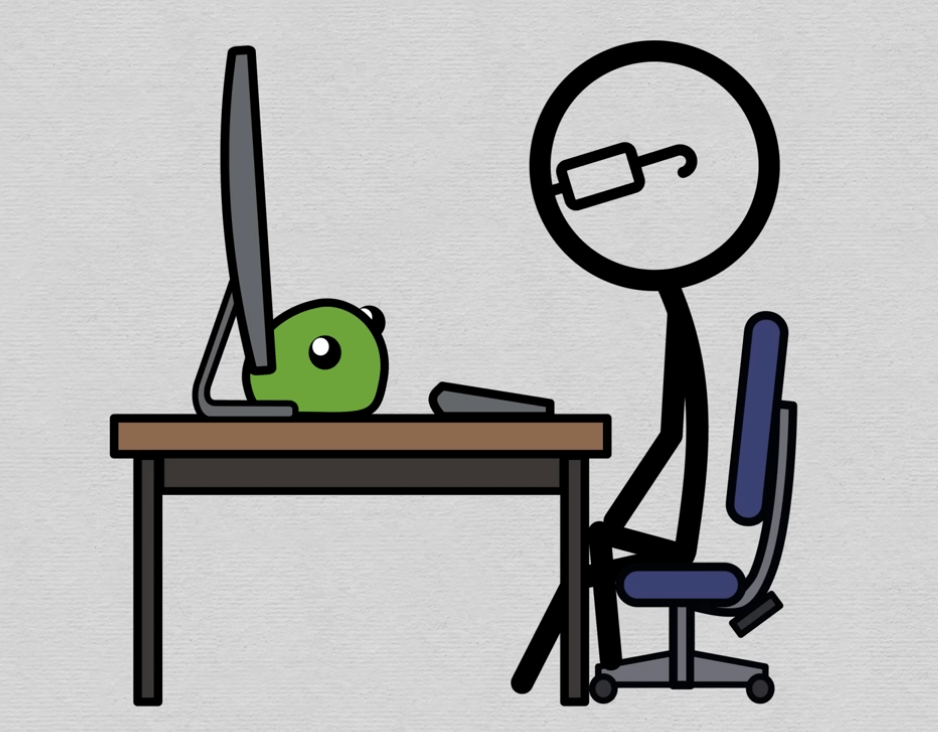
Glitches and Blunders
Glitches are mistakes that are good at hiding in plain sight. Blunders are embarrassing, visible, but still harmless mistakes (think Bushisms). Glitches and blunders become more common the more you have to do — putting on a sweater backwards before you rush to work, calling someone by the wrong name after you’ve just met a dozen new team members. These are worthy of grace, of laughing it off.
Errors of all varieties
Errors range from the trivial to the significant, and are more varied in how people perceive size, importance, or even if there’s an error at all. Grey playfully names their species, including:
- Error Trivialis
- Bad Takeus
- Technically Correctus
- Error Factualus

Notably, every error requires a judgment call, weighing the cost of fixing the error vs. the benefit of moving on. Unless, that is, you make a catastrophic error — one that fundamentally breaks what you’ve made. They demand a do-over, a recall, or some equivalent.
Step 2: Calibrate to your context
Grey’s mistake taxonomy leaves the critical last mile to the audience, using one keyword to back out of any specific guidance: “perceived.” As political strategist Lee Atwater famously stated, “Perception is reality.” As such, I’ve learned to consider what I perceive, what my stakeholders perceive, and how to mediate between the two. Said another way, three pieces of context guide my error response: my objective, the work’s development stage, and organizational expectations.
Know your objective
Your primary goal should inform what kinds of mistakes are acceptable. If you’re a history teacher, for example, factual errors would undermine the entire endeavor, whereas technically correct errors (e.g. omissions) are necessary to manage class time constraints.
My objective in this blog post is to help ease the mental burden of navigating uncertain expectations in one’s career. Thus, while I can’t afford a bad take, I may well make some trivial errors without impacting this post’s clarity, accessibility, or truthiness. In setting your own boundaries and standards, you tap into your own intrinsic motivation — which leads to better work.
Adjust to the stage of development
As work goes from concept to finished product, it’s rarely worth aiming for perfection until the clear shape of what you are driving towards emerges. In copy editing, for example, editors target attention towards one focal problem to solve per editing round — nailing the story, then nailing the flow, then word choice. Trying to do all three at once tends to fragment attention and drive anxiety born of ineffective strain. Rather than wasting attention, I’ve learned to focus it and let go of certain errors before their time has come to be addressed.
Calibrate to your organization’s expectations
Almost more important than whether you correct a mistake is agreeing with those impacted about how to manage mistakes. As we noted above, mistake tolerance is highly subjective and varies by industry, organization, and team. Some optimize for speed and fast feedback, allowing mistakes to abound in support of rapid iteration. Some are highly image-conscious and demand perfection as a proxy signal for competence and trustworthiness. Notably, the latter is not a sustainable strategy; such organizations are often marked by high turnover (e.g. management consulting).
Regardless of your org culture, set expectations. Have discussions early and often about what your colleagues need and expect from you. Understand how much they want to co-create versus review polished work. Convey where you are in the development process. Gauge whether your teammates can engage with ideas before they are fully fleshed out. Whether you agree or not with your colleagues preferred approach, knowing is half the battle.
Mistakes will be made
Cringy as mistakes may feel, Grey gives us a reality check: “If you make things, there will be errors.” Unless lives depend on it, there is no truly “right” or “wrong” approach to managing mistakes. What matters is that you have one.

 MBA in the City