AI enabled travel is here: 5 ways travel just got easier

All segments of the leisure industry seem to be having the same idea simultaneously – how can they make your travel experience more seamless. We all want to get the most out of each day, and to minimize the decision fatigue that degrades our experiences. Five companies stand out in their moves to integrate technology into a traveler’s day-to-day.

1. Before you go – KLM has your back with its voice-driven packing assistant
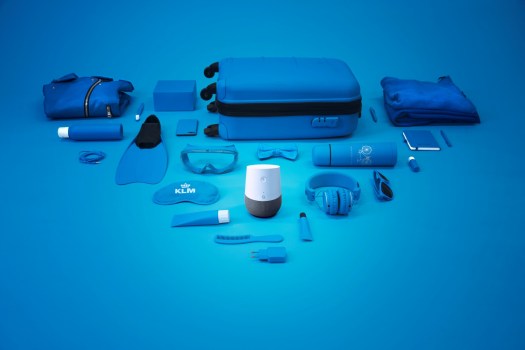
Just let service bot BB know where you’re going and when you’re leaving, and she will walk you through packing, piece by piece, equipped with silly pre-programed jokes to let you know bot makers have a sense of humor, too. Enabled by Google Home.

2. When you arrive – voice-driven concierge service in beta testing at Best Western

Best Western is testing out Amazon Dot for customers and staff, to quickly customize in-room experiences, from wake-up calls to room service requests.

3. For work trips – work from the shower

For those on a work trip or who are looking to create on the go, Marriott is beta testing a technology to whiteboard in the shower.

4. Also for work trips – work in a co-working space

Airbnb is offering WeWork day passes to guests.

5. For play trips – wearables making cruise navigation easy

Carnival Cruise has created the Ocean Medallion to provide customized experiences and recommendations based on your profile and location on the cruise ship.

All of these initiatives, striving to make the customer experience frictionless, both expand the customer experience, and more easily open customer wallets to ancillary offerings. I count this as a win-win.
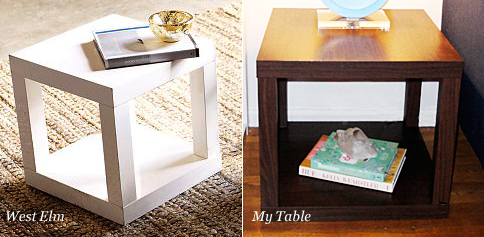
 

Minimum viable niceness – when high design and average quality make a happy consumer

In the consumer world, design and appearances matter. People want to feel good using the items they buy, for wearing or for everyday use. And with ever-improving just-in-time supply chains and the rapid dispersion of ideas via the internet, it’s hard to keep the best designs a secret. Which has given consumers the M.O. to comparison shop, to find a nice version of the thing they want that will work well and cost less than the ultra premium. We are looking for minimum viable niceness.

There are a few brands that have come up with a mass market model, that have cracked the “fast-follow” code such that they can rapidly roll out a cheaper rendition for a fraction of the price. No, this isn’t the Canal Street equivalent of a “Louis Vuitton” handbag anymore; these items will last well beyond one use. Here’s my view on some of the “nice with a good price” go-tos.

Wayfair

When kitting out my new home, I found lamps and bed frames that looked straight out of a Chelsea furniture store, but at a fraction of the price. I was pleased that products matched the website pictures to the tee.

Macy’s

Their buyers seriously know what they are doing. I’ve seen brands like BCBG that are rapidly losing their brick and mortar footprint have much more stylish pieces at Macy’s with 40% markdowns on top. I also found my futuristic leather couch for a fraction of what the high end decor stores would charge.

Beauty in general

A lot of skin care product quality depends on ingredients more than brands. I advise getting a facial or two and picking the brains of your estheticians. They often have a few recommendations that are inexpensive. And for make-up, I learned from a beauty business person that all eye shadows are basically the same.

Ann Taylor

This one is sort of a hidden gem. I have found some great dresses and accessories there that are nearly runway. It’s hit or miss – but the hits are well worth the browsing.

Stitch Fix

I am continually impressed with their stylists’ ability to find on-trend items, personalized to me, at reasonable prices. I’d give Stitch Fix a try if you don’t have a nose for fashion wins but, rather, “know it when you see it”.

You may be wondering how we got to this point of having so many moderately priced, stylish consumer product king pins. The advent of “masstige” brands like Target in the 1990s brought the the public the idea that they could own decent stuff that represented personal styles at a very reasonable price. This was easier to pull off in the fashion industry to start, where the styles of the season are established a year or so ahead of time, allowing fast fashion houses like Zara and H&M to crank up their supply chains as soon as Italian models hit the runway. The next frontier for affordability after fashion was home decor and furnishings. We saw brands like Ikea and Wayfair give West Elm and RH a run for their money. And beauty brands like L’Oreal convey modest luxury while also being available at CVS. So now, in our great nation, personal style can be done at prices that work with the people and for the people.

Turn it up – temperature control and the human experience

Temperature is like logistics: when everything is right, you don’t notice it. It affects our performance, and our daily experience. And yet it has only been since the 1980s that air conditioners have become a standard fixture in homes as well as office buildings. The 99% Invisible episode on the advent of air conditioners provides a clear example of what separates us from the monkeys – despite what Stephen Dubner might say – namely, that we can modify our environment to our preferred specifications to an insane degree now (pun intended).

Not only can we make our stationary spaces as comfortable as possible, but more an more we can control our personal environment as we travel, with the advent of performance fabrics. I’m not just talking GOR-TEX and the Colombia Omni Heat boot. I’m talking about Stanford’s reversible fabric innovation that can warm and cool. The inventor, Yi Cui, was slightly horrified at the green house implications of our American life style and posed the question: rather than changing a whole building, can we localize temperature control to a single person. He invented an answer. Not yet wearable, but when it gets there, we may be able to experience comfort everywhere we go, without so many negative externalizes. Right now, I’m wearing a hoodie because I’m freezing in my open office. But tomorrow, I will choose my Performance Hoodie (TM) to maximize value for my employer. It’s a win-win – my work will be better than if I micro dosed on LSD*, and office overhead costs will drop with lower energy bills. It will be the real deal.

*This reference is not an endorsement of taking illegal drugs. I mean, even Steve Jobs said you should, but I can’t endorse it.

A word from our readers: the addendum edition

This week we’ve aggregated the musings and factoids of our readers from past posts.

America’s success is Japan’s ikigai

After reading our Index Card Summary of “So Good They Can’t Ignore You”, one reader likened the American Success (TM) model to the slightly more sophisticated Japanese idea of ikigai, which adds societal need into the equation of success.

So now before you quite your job to start your Yelp for people app, ask yourself the critical question – does the world need it?

Working people! Make some ambient noise!

On the topic of focus, we covered a music platform populated by music writing software that knows how to get you on the right wavelength: brain.fm. A reader shared that once you’ve picked the right music, it’s handy to choose the right volume – which happens to be 60 decibels for ambient noise. This is why coffee shops are an ideal work environment for creative people – like satirical bloggers!

We’re all Spider-Man deep down

In our re-branding of the solar system from ancient gods to modern ones, we heard a compelling argument that Earth should really be renamed Spider-Man, because Spider-Man is the Every-man that we all want to be and would be if we could…because deep down, we all want to be from Queens.

Cheers to our readers for the thoughtful feedback!


The Freakonomics edition: can parking tickets be a good thing?

Parking tickets are almost a right of passage for drivers in New York. An estimated $440 million in revenue is collected by NYC annually via parking tickets. Put another way, that’s ~$50 per New Yorker. This raises a question about incentives: are New Yorkers incentivized to violate traffic laws by the City of New York? Do ticket recipients usually feel pangs of angst and injustice at the site of the orange envelopes, or are they more often calculating whether it’s the lesser of two evils?

Let’s look at the specific example of street parking. Is it, in fact, often cheaper to rack up parking tickets than to pay monthly parking garage fees?

Suppose you are choosing between free street parking and a parking garage. Let’s assume you live above 96th Street. Parking garages above 96th cost a minimum of $300 per month, plus tax.

Let’s suppose also that you only use your car on the weekends, and that it is easier to find street parking on the weekends, so you leave your car in its spot during the week. But during the week is when street cleaning is happening where you parked. That’s a $45 ticket for each Alternate Side Parking violation. Yet even if you do this week in and week out, you may still find that your pile of tickets adds up to less than a garage.

Below 96th St, at $65 per ticket, your violations would add up more quickly, and yet still may be less costly than many garages. As the image above depicts, the expensive park-front garages seem to be anchoring around $700 p.m.

It is entirely possible this dynamic is a total unintended consequence in the NYC system. And the Department of Transportation is certainly making strides to create a better user experience: they recently made it easier to dispute tickets with a user-friendly app! No need to see a judge to raise a dispute now. This could be especially helpful for out-of-town friends who get slapped with the other NYC traffic police trope – towing.

This article contains personal opinions and observations only. The above analysis is not legal advice or advice to break the law.

Restaurants now help serve up ideas

There’s a visible trend of communal seating in the dining world, especially at fast casual restaurants like Dig Inn. At first I wondered if the Sharing Economy had gone too far – taking out seating real estate just like WeWork has small businesses share conference rooms and kitchens. Are these businesses just squeezing out more dollars per square foot or actually adding social value? I suspect that Dig Inn is just using timely positioning for its foot traffic goals. But others like Coup, former bar and now a pop-up bar, have leveraged the communal seating for a actionable social good.

At Coup, 100% of profits go to non-profits, including those de-funded under the Trump administration. Patrons each received a token per drink with which to vote on featured charities by placing chips in jars placed along the edge of the room. Social interaction is encouraged by placing the jars on ledges behind tables. Did ideas end up being exchanged between strangers? Possibly on occasion. Whether it worked or not, I endorse the concept. And whether it happens or not at Dig Inn, I’m still eating their delicious meat balls and roasted sweet potatoes.

The Slow Shipping Movement

Had it really only been five days? It had felt like aaages (and by ages, I mean at least a week), as I wondered where my special edition collectable bobble head set was. And then it dawned on me, this company must be part of the Slow Shipping Movement! After all, why do I need those bobble heads in two days? Slow Shippers know customers will appreciate items more once they arrive because of the delayed gratification.

Like the Slow Food Movement, Slow Shipping gets you to appreciate where your products are coming from, the “ingredients” of what are being shipped to you.

I wrote in my gratitude journal that evening, still awaiting my package, that I am grateful for all the hands that have touched this unique product, to deliver it to my shelf.

Adventures in re-branding: Hotel execs get wrong what Airbnb gets right

Hotel execs must be reading my blog; I think they loved the re-branding of the solar system so much, that they’ve decided to keep doing what they are doing, but re-brand it as giving a “feeling of home comfort”. Now at hotels like The Standard, the concierge is labeled the “personal concierge”. You can have laundry access, just like a home – but limited to two items per day. Some tasty snacks will be ready in your room – all for the already rolled in $100 surcharge. And at a week or longer, you can get up to 40% off of your rooms (already a common practice among hotels).

These hotels marketing a homey experience are doing nothing different to what they’ve always done; the ingredients to their conception of a “home stay” are not so earth shattering as is their marketing. And this is also where they reveal a fundamental misunderstanding of their unique selling point.

What differentiates hotels from coach surfing and home sitting is the guarantee of comfort – a good night’s sleep in a clean room and a comfy bed, and your own personal space with no house rules to follow. What makes Airbnb competitive is the lower prices and good locations, more so than the home-made experience. So unless a hotel grows legs and moves to a more optimal location or slashes prices, fresh muffins in the morning ain’t gonna win those customers back.

Airport yoga: the basics

Long weekends like President’s Day can woo us to long flights to the sunshine. And to be in good form for the flight and your vacay, getting your zen on can get you in the right frame to handle the most primal of human settings: the airport gate waiting area. Below are a few simple moves that can be achieved with your travel essentials, including your phone and your luggage.

Upward iPhone

While you’re crafting your last #hashtag before boarding, make a gentle back arch, chin uplifted at a 30° angle, arms gently curved in half circles, holding your phone screen towards your face.

Luggage Lunge

Taking a wide stance, bend your right knee, with your right foot pointed outward, and lengthen your left leg, with the left foot pointing forward. Use your roller luggage handle to stabilize.

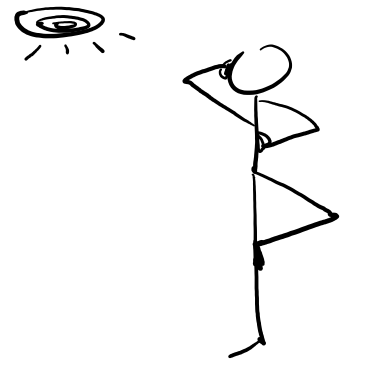
Listening Tree Pose

As you desperately crane to listen to sporadic announcements — in case they are for your flight — take a moment to re-center by balancing on one foot, one hand cupped to ear and one hand in prayer position.

Weekend Warrior 1

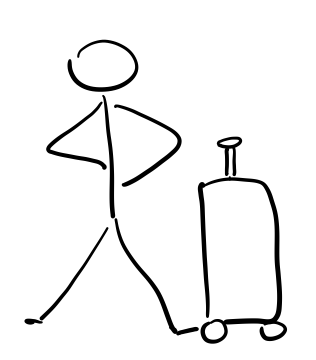
While waiting to board the plane, take a wider then hip distance stance. Place your hands slightly above your hips, and breath deep.

This may deter antsy travelers vying for overhead space from edging in front of you. Move forward at a regular pace, trusting that line-cutters will experience bad karma from observant flight attendants.

Snack Stretch

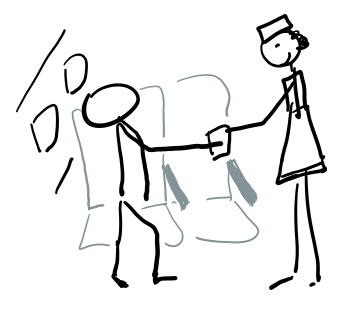
As the stewardess offers you a snack, accept with the outside hand (the one closest to the window), giving you an opportunity to rotate your torso and have a cross-body arm stretch.

Remember before you board to take each waiting opportunity to get that blood flowing and expand outward before you crunch into an economy seat.