
Who am I? A real question as the physical/digital divide gets blurrier

Who am I? Many a wise man, from Beanie Man to Hugh Jackman in Les Misérables, have asked this question over the years. And with each individual’s growing digital presence, the question becomes more challenging to answer. Not only is a different piece of ourselves presented at work, school, and home. Now different aspects of the self are also presented via the different digital platforms we engage with. We are being shaped by what we consumer, by our digital socialization, and by how we interlink our physical and digital realities.

You are what you consume

Similar to the truism “You are what you eat”, the modern equivalent “you are what you consumer virtually” rings true in this digital age. My inbox has provided a retrospective of my digital self of late. Rather like a string of Facebook Memories, GDPR has surfaced all sorts of websites with Privacy Policy updates that I’d long forgotten, that are vestiges of my digital self from 10-15 years ago. It’s fascinating to see what I was interested in as a teen and reflect upon how those interactions have shaped me today — but equally frightening how many people have my e-mail address!

Projection, personification, and socialization

It is easy to project perceptions and feelings onto increasingly human-like and sophisticated AI, particularly in the realm of voice assistants. With increasing openness to the Alexas and Siris of the world comes a new level of openness to such AI shaping our behavior and thinking. Kids provide clear illustrations of this. Children today may not believe in the tooth fairy, but they believe in Siri and Alexa. Not only do children consider these voice assistants friends; they also see them as a source of encouragement. Think about it – if you ask Siri a question, she answers honestly and admits when she can’t answer. She never gets frustrated, no matter how many questions you ask. If you struggle to express yourself fully, Alexa offers non-judgemental, friendly reactions. Inc. Uncensored cited a story of a child learning English gaining the courage to be vocal through interactive dialogue with Google Assistant.

Connecting the digital and the physical

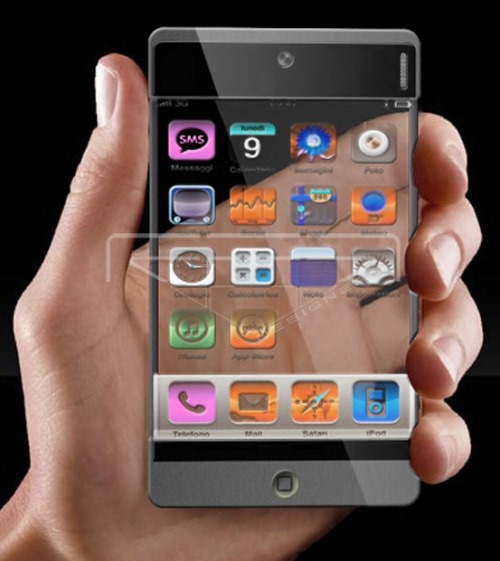
With our augmented brain, a.k.a. our phones, continuing to connect the dots with our physical selves, we will increasingly see ourselves and the physical items around us as having digital identities as much as physical ones. Apple has already released new features of its ARKit to developers, and look how one creator has already connected digital information to physical items: he’s connected his account data to loyalty cards and passes. This pairing of physical and digital removes not just the logistical separation of information, but also the mental separation.

 Easier to use loyalty cards with AR

Easier to use loyalty cards with AR

There is much to be wary of — or at the very least, to be aware off — as the information age continues to transform not just our daily lives but our beings. I, for one, have found cyborgs in the Sci-Fi universe fascinating and hope to evolve into a hopefully good-natured one myself. This is a space I will be watching – so stay tuned!

 What a friendly-looking cyborg!

What a friendly-looking cyborg!

A word from our readers: the addendum edition

This week we’ve aggregated the musings and factoids of our readers from past posts.

America’s success is Japan’s ikigai

After reading our Index Card Summary of “So Good They Can’t Ignore You”, one reader likened the American Success (TM) model to the slightly more sophisticated Japanese idea of ikigai, which adds societal need into the equation of success.

So now before you quite your job to start your Yelp for people app, ask yourself the critical question – does the world need it?

Working people! Make some ambient noise!

On the topic of focus, we covered a music platform populated by music writing software that knows how to get you on the right wavelength: brain.fm. A reader shared that once you’ve picked the right music, it’s handy to choose the right volume – which happens to be 60 decibels for ambient noise. This is why coffee shops are an ideal work environment for creative people – like satirical bloggers!

We’re all Spider-Man deep down

In our re-branding of the solar system from ancient gods to modern ones, we heard a compelling argument that Earth should really be renamed Spider-Man, because Spider-Man is the Every-man that we all want to be and would be if we could…because deep down, we all want to be from Queens.

Cheers to our readers for the thoughtful feedback!


The Freakonomics edition: can parking tickets be a good thing?

Parking tickets are almost a right of passage for drivers in New York. An estimated $440 million in revenue is collected by NYC annually via parking tickets. Put another way, that’s ~$50 per New Yorker. This raises a question about incentives: are New Yorkers incentivized to violate traffic laws by the City of New York? Do ticket recipients usually feel pangs of angst and injustice at the site of the orange envelopes, or are they more often calculating whether it’s the lesser of two evils?

Let’s look at the specific example of street parking. Is it, in fact, often cheaper to rack up parking tickets than to pay monthly parking garage fees?

Suppose you are choosing between free street parking and a parking garage. Let’s assume you live above 96th Street. Parking garages above 96th cost a minimum of $300 per month, plus tax.

Let’s suppose also that you only use your car on the weekends, and that it is easier to find street parking on the weekends, so you leave your car in its spot during the week. But during the week is when street cleaning is happening where you parked. That’s a $45 ticket for each Alternate Side Parking violation. Yet even if you do this week in and week out, you may still find that your pile of tickets adds up to less than a garage.

Below 96th St, at $65 per ticket, your violations would add up more quickly, and yet still may be less costly than many garages. As the image above depicts, the expensive park-front garages seem to be anchoring around $700 p.m.

It is entirely possible this dynamic is a total unintended consequence in the NYC system. And the Department of Transportation is certainly making strides to create a better user experience: they recently made it easier to dispute tickets with a user-friendly app! No need to see a judge to raise a dispute now. This could be especially helpful for out-of-town friends who get slapped with the other NYC traffic police trope – towing.

This article contains personal opinions and observations only. The above analysis is not legal advice or advice to break the law.

Can Walmart beat Instacart?

It’s been fascinating to see Walmart level up from bargain bin to bleeding edge, as they entered the e-commerce race against Amazon. Their acquisition of Jet.com and expansion into e-grocery delivery were only the start. Their latest announcement left me beaming with hope for the future of online grocery shopping, as they step up as that someone to save me from my Instacart woes. This is Star Trek level next horizon tech, deployed for our shopping delight. Drum roll please….select your own produce via 3D imaging!

Okay okay, this may not sound as thrilling to you who have no trouble getting to a supermarket any given day. But if you’ve lived in an urban supermarket desert before, you know exactly what I’m talking about. You’ve tried FreshDirect and gotten a bruised $2 tomato. You’ve tried the Instacart route, where they had 90%+ accuracy on your first order, but your second order was half missing or substituted with “equivalent foods”. SPAM IS NOT HAM! GRADE A EXTRA LARGE EGGS ARE NOT THE SAME AS ORGANIC FREE RANGE VEGETARIAN GRASS FINISHED EGGS! AND DRIED CRANBERRIES…well, actually, those are all the same.

I think we all want food to taste good and not be wilted and on its way out when it arrives to our kitchen. When the patent clears and the tech is rolled out, I will be there to test it out, in the hopes that it is the harbinger of a brave new grocery world.