Nature, nurture or neither? The power of titles

What is in a name? That which we call a rose, by any other name would smell as sweet.

— William Shakespeare, Romeo and Juliet

Human resources department across America have been forced to ponder William Shakespeare’s question as the demand for and supply of creative titles has proliferated in our millennial-filled workplaces. Titles like “ninja”, “rockstar”, and “magician” have become common place. This shift in corporate and startup culture alike provokes the question of how much titles influence behavior, and vice-versa. Psychology and history both have something to say about this question.

Titles vs. labels vs. names

Titles are an indication of what an organization ascribes to your role. And it could be argued that names and labels play a similar role of indicating expectations of an individual. So we will explore the history and research of the impacts of each.

What is in a name?

Names hold great significance in the Bible and Torah, indicating family history, identity and personality. Re-naming in both books also indicates a transformation in the person’s life. Still, it is not entirely clear from the stories what to conclude about the roles of nature and nurture, whether the name shapes one’s destiny, or whether one defines the ultimate meaning of their name.

Recent academic research by Steven Levitt of Freakonomics posits that there is no relationship between a person’s name and their life outcomes. This is colorfully illustrated by the stories of Winner and Loser Lane, brothers whose life outcomes were opposite to their birth names. Loser was a winner, a star student and athlete who joined the NYPD. Winner was a loser, living a life oscillating between incarceration and homelessness.

Boxing people in.

Adjacent to names are “labels”, categorizations that we place people in. And labels have been seen to have significant effects on perception. According to the linguistic relativity hypothesis “the words we use to describe what we see aren’t just idle placeholders–they actually determine what we see.” Social psychology research has demonstrated the impact of labeling on social treatment. In a 1963 study, Rosenthal and Jacobson found that teachers labeling students as “smart” or “slow” changed their academic trajectory, positively impacting the IQ of “smart” students by 10-15 points over the course of a year. They called this impact the expectancy effect: once you label someone something, you expect that attribute of them, and you perceive and encourage more of what you expect.

Titles in social contexts.

Popular wisdom posits that job titles are closer to labels – they affect how people treat you inside and outside of a company. With half of Americans gaining their sense of identity from their job title, many individuals are giving power to their titles to impact their sense of importance and self-worth. Yet this does not need to be the case; one’s actions and implicit role can shape perception of titles more than the title itself.

The history of the title “president”

The role of president was intended to be fairly minor at the outset of the American republic. When deciding the title of our founding father, George Washington, The House of Representatives was adamant that he have a simple title. Whereas the Senate proposed “His Highness, President of the United States and Protector of Their Liberties”, the House demanded removal of any attribution resembling monarchy rule. “President” was reasonably diminutive; a local bridge club could have a president. The title simply meant a person who presided over an organization.

Yet over time, the role and how the president has acted has changed the meaning of the title. Today, there is much less distance from the term “king” as was originally expected and intended. In part, the actions that presidents have taken have given them greater authority. FDR’s New Deal created an era of big government, also attributing greater responsibility to the president. Nixon was said to have expanded the power of the president beyond that of any predecessor, expanding decision-making in foreign affairs and exercising greater budgetary and programmatic power. Beyond how presidents have shaped the power of the office, the office came with inherent authority to set priorities and issue rules, which drove a natural evolution of the office. In other words, the office was always intended to have significant power.

Your title, your role

Some are born great, some achieve greatness, and some have greatness thrust upon them.

— William Shakespeare, Twelfth Night

Whether your title confers great responsibility to you or not, you will have opportunities to shape your own role and story in your work. Yes, your title will impact first impressions and expectations inside and outside of your company. But no one’s abilities, role, and trajectory are completely summarized by their title. So call yourself Wonder Woman if it get you up in the morning, as long as you are living into a fulfilling role and not being limited by it’s titling.
Keeping social media from steeling your vacation

Unhashtag your vacation

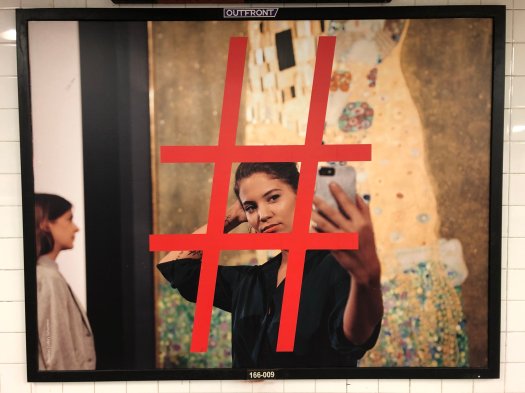
I noticed a bold ad campaign at 14th St. for a city not a lot of people talk about. It’s a city I’ve been to, the home of Mozart, with airy music chambers graced by string quartets and delicious chocolate deserts. Things that are engage the senses beyond sight. Their ad campaign slogan is “unhashtag your vacation”. Their campaign images use a hashtag like a strike-through. They suggest to the viewers that they should engage with experiences personally rather than positioning them for personal branding on social media.

These ads are a bold statement – speaking to America, the birthplace of Mad Men, in our own language – marketing. Because social media has literally become dangerous.

Death by selfie

The viral photo of the queue of mountaineers waiting to take their selfies at the summit of Mt. Everest, and also struggling for oxygen, has shocked the world into a moment of reflection.

Eleven deaths resulted from the excess of wealthy adventurers. Have vacations been reduced to photo ops for bragging rights?

In the same moment, Vienna is challenging us to think about the purpose of vacations and the role of photography – big questions in a world with a growing middle-class and a camera on every personal device. To answer these big questions, it’s worth walking back to the land before digital photography and the world before social media, which I grew up in.

My journey from photography to social media

My first experiences traveling were on middle school trips. My parents let me borrow their film-based camera, and I took as many as 3 roles of film for a 3 day trip to places like Salem, Massachusetts and Washington, DC. With film, you never knew how a photo would come out until it was processed, so I erred on the side of volume. I assumed everything was interesting, worth capturing and documenting, from store fronts to tourist attractions to friends. Eventually I realized that my documentary style photography was a little extreme, and only ~10% of the photos had strong visual interest – I wasn’t even looking at most of the photos! In high school, I had fewer field trips and was more selective about what I photographed. My photography became anthropocentric, capturing natural moments that I valued and events that were firsts or celebratory. I made my favorite photos into little gifts, which friends loved. They were personal moments made special, for private consumption.

When digital photography arose in my college years, I had opportunities to travel again and work in other countries in the summers. My first digital camera was quickly stolen, and when I finally acquired a new one, I was more sparse and selective about what I photographed. Only the most beautiful sites that I would not want to forget. The misted mountains of Machu Picchu. The colorful sands of the Atacama Desert. Enchanting sights that I had never imagined existed, let alone having the chance to visit.

As I was starting to travel, social media was on the rise. This meant, for the first time, large scale external feedback, for better or for worse. I joined the fray of “look how awesome a time I’m having” posts for a while, but found myself naturally limiting my Facebook consumption to one hour a week. Yet I found that hour to be mostly an unhappy one. I told myself I was keeping up with friends, but increasingly just felt left out of all the fun people were having without me. But business school amplified my use and, thus, the detrimental effects of social media, which have now become well documented.

I now sit in the in-between. Sometimes I feel like I should participate in social media because my peers do, yet it doesn’t fully make sense to me. I see lots of photos of food with hundreds of likes, yet when I take similar photos they feel uncompelling, and I never post them. It feels strange, creating content that has become part of our typical virtual communication, but it feeling entirely forced and artificial. Increasingly, I try to eat my chocolate cake without photographing it, too.

Vacation for vacation’s sake

It goes without saying, vacations are more than just selfie opportunities. They are about your being present in a refreshing setting, not about the social media story you tell about it. I used to take a ton of photos and go through roles of film. Then I realized I was neither stopping to look at the photos nor stopping to really soak in the sites I was visiting. Vacations should not be about the external feedback that social media provides. What is most important is the internal moments of reflection, observation, and appreciation that they offer. And the same is true of our weekends, our moments with family and close friends, and every joie de vivre.

Congraduations!

By guest contributor Jim Wallace

From the classroom to the boardroom, how to prepare for the modern office

You’ve done it! Today is your day. You’ve finally graduated and are ready to make your mark on the world, and here at MBA In The City, we’ve got your back. It was not too long ago we too first stepped foot into corporate America, and today we’re going to impart our hard won wisdom to you and your graduating class of [insert year]. Yes just for your class.

After four years of philosophical debate about the deepest problems of society, you may feel some mild existential dread about joining a traditional business. Rest assured, the rumors you’ve heard are wrong; the workforce isn’t a soulless cubical landscape as far as the eye can see. It’s actually a soulless, open plan landscape as far as they eye can see or, more importantly, as far as the voice can travel. Modern offices are very good at optimizing for the bottom line. That means you have to be good at optimizing your own productivity. To do that, you’ll need some important equipment.

Micro-climate management

With air conditioning as a staple of the modern office, you may have assumed that we have conquered the temperature variations that plagued our ancient ancestors of the 1900s. The modern office instead brings a taste of adventure that appeals to its diverse and outdoorsy millennial talent base. Moving from place to place in today’s office is a journley through all of the climates on earth. One minute you’re in an jam-packed conference room that is slowly approaching the temperature of the sun. The next minute you’re on an arctic adventure, exploring the landscape that is the vast openness of the sea of monitors. To make sure you’re spending your energy working and not shivering or sweating, we recommend layering for the extremes.

Whether joining a meeting or working at your desk, every day you’ll need a few key garments for work.

  • Nice lightweight blouse or button-down shirt

  • A sweater or sweatshirt

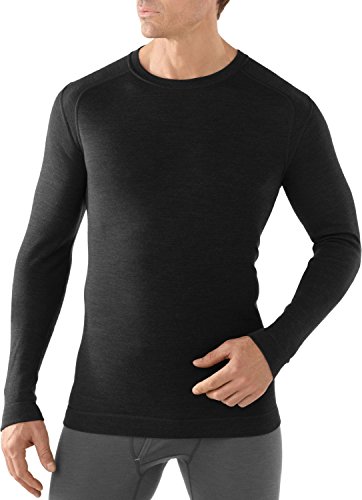
  • A smart wool undershirt (250 gram)

  • A heaver smart wool undershirt (400 gram)

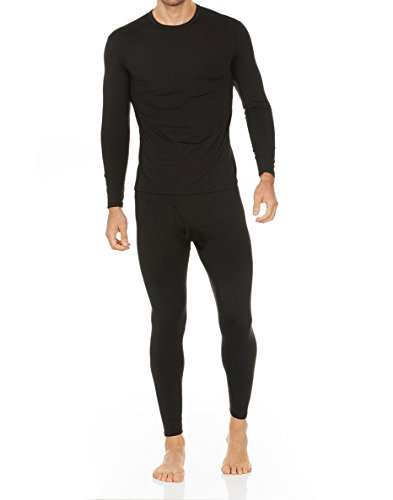
  • Long johns (especially in the summer)

  • Ski pants

  • A parka

  • Space heater

Bring your own toilet paper

In the competitive global economy we operate in, businesses must maintain their profitability by watching costs down to the cent or, as it were, the sheet. Niceties like two-ply toilet paper are just not in the budget. If companies splashed out on plush TP, how would they ever pay for the carefully engineered executive compensation packages? Work hard, and it may one day merit that coveted two-ply, and a promotion. Yes, just like school, promotion is merit-based, as our corporate leadership demographics point to. And executives have clearly been working harder and harder year on year, as CEO pay has continually increased over the past 30 years as a multiple of median employee salary. We need to support our fearless leaders and their personal sacrifices with multi-million dollar salaries, especially if the company is failing. You can remember with every wipe that your sacrifice is matched by theirs. But, if you like to wipe in style, add toilet paper to your supply list.

And with all the kit you’ll need, it’s time to think about how you’re going to store it.

Have the right bag

With hot desking and the general dearth of personal storage space that characterizes the modern office, you might be wondering where all your personal items will live at work. And at the same time, as the boundary hours of work life and home life blend, you’ll need to adjust the inventory you tote accordingly. Here’s what you’ll need on hand throughout your day:

  • Laptop computer

  • Charging cables, including

    • USB A to micro USB

    • USB A to mini USB

    • USB A to Thunderbolt

    • USB C to USB C

    • USB A to USB C

  • Laptop charger

  • Backup battery

  • Gym clothes

  • Water bottle

  • Locker lock

  • Full toiletry set, including toilet paper

  • All the professional clothes above

  • Office supplies, including

  • Pharmacy staples, including

    • Advil

    • Cold medicine

    • Vitamins

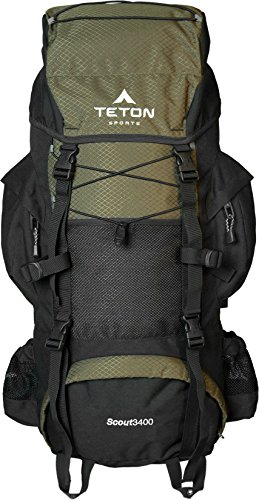
It’s a lot to carry, but we have good news: finding the right bag will actually require very little adjustment. Since you’re already used to wearing a backpack at school, you just need to upgrade to adult-sized gear.

Always eat before an event

We have observed a mathematical law that corporate events provide an amount of food equivalent to:

where x equals the number of employees who have RSVPed to the event. Thus, the per person allocation is ever decreasing as the size of the company and event increases. You can expect a full burger at a startup, a slider at a mid-cap company, and a meatball at a large company affair.

How to create a private space

 B

Most offices have plenty of conference rooms — that are always double-booked. These days glass walls are in, thanks to execs like Zuck taking the desire for transparency very literally. But if you’re a lactating mother or taking that doctor’s call about your infection status, you may not want to be on display. You could carry a “do not enter” sign to hang on the bathroom, which is now the most private space you will find in your building (It worked for Zack Morris!). That does feel a little budget though. Not to worry, Hushme has a solution for you: a noise canceling mouth-piece. So does BloxVox. You will look like Bane from Batman, but it gets the job done.

On the flip side, your peers may not have cottoned on to new privacy tech, and you may find yourself listening to messy divorces from spouses who don’t understand who their new family is.

Final thoughts

This is a starter guide, and doesn’t cover every contingency. So you will need to stay on your toes out there. I once worked at a company that was trying to win an office design award. To enhance their clean aesthetic, they took away all of the trash cans. As localized trash mountains began to collect, I realized it was time to improvise. I purchased a purse hook to hang a small plastic bag from my 3-foot-squared desk space as my new trash. The company was so inspired by this grass roots solution that they bought everyone branded purse hooks to use for their own trash! They did not provide bags though.

Oh, also, open offices can be kinda noisy. You should get a nice pair of headphones.

From Adam Grant to Susan Cain: What introverted leadership looks like

The article is for all the introverts out there who have risen to a leadership position. Looking at your peers, you may intuitively notice as you look laterally and above you what the data show: 96% of leaders self-report as extroverts. You may be wondering if you can succeed and be effective as a leader, given your personality type. Let’s look at what at the science has to say.

First, can you fake it til you make it?

Your first course of action may be to consider, can I just act like an extrovert until I become one? The science of personality suggests that this would likely be an uphill battle. The Big 5 personality traits (which have more research backing than the Myers-Briggs framework) have been shown to have strong consistency over time, with only moderate changes over many years. The Extroversion/Introversion trait is highly stable; it can vary somewhat over time, but not significantly. So your best bet is to figure out how to play to your own strengths as an introvert.

The research summary that follows re-frames leadership from having “correct and incorrect” styles to “pros and cons” that pair with personality type. There is a way to play to your sweat spots and craft your environment for success.

The research

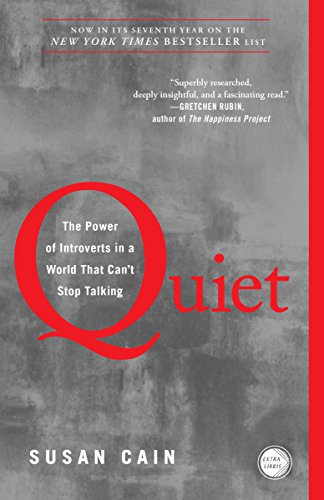
You may remember the best-selling book Quiet: The Power of Introverts in a World that Can ́t Stop Talking. Authored by Wall Street lawyer turned author, Susan Cain, who took the reader through her seven years of aggregated research on the strengths that introverts wield and the cultural dynamics that they navigate. Adam Grant has recently brought back to the fore some of the key findings on what type of people introverts manage best. Below is a summary of the key points for business leaders to consider.

In Index Card Summary style, the three key lessons to keep in mind, and that I walk through below are:

1. Introverts and extroverts make equally good leaders, but are more effective at leading different types of people.

2. Yet the extrovert bias is real and present in corporate America.

3. Effective leaders who are careful to avoid similarity bias will craft environments for each personality type to thrive in.

1. Introverts and extroverts make equally good leaders, but are more effective at leading different types of people

Cain and Grant both cite introverts as being uniquely good at leading initiative-takers. Their inclination to listen to others and lack of desire to dominate social situations makes introverts more likely to hear and implement suggestions. By encouraging the talents of their teams, they can more easily motivate them to be even more proactive. The challenge for introverts is to manage misguided or less proactive employees.

2. Yet the extrovert bias is real and present in corporate America

As Cain shared with Business Insider, “Extroverts are routinely chosen for leadership positions and introverts are looked over, even though introverts often deliver better outcomes. They’re not perceived as leadership material.” The modern American archetype of a leader is a talkative alpha who is comfortable in the spotlight – the more a person talks, the more attention they receive, and the more powerful they are perceived to be. The result is that introverts are seen as poor leaders by 65% of executive leadership. They also earn ~20% less and manage half as many people as extroverts, according to Truity Psychometrics.

3. Effective leaders who are careful to avoid similarity bias will craft environments for each personality type to thrive in

Adam Grant posits that the dynamism of modern business environments makes proactive employees critical, and introverted leaders tend to encourage and cultivate such employees. The most effective teams are composed of a good mix of introverts and extroverts, and it is highly possible to create a symbiotic environment for both. Leadership can craft and distribute tasks based on people’s natural strengths and temperaments. For example, extroverts can more effectively manage information overload, high pressure, and multi-tasking, while introverts are better at solving complex problems through patience, clarifying, and persistence. Projects and their timelines can be crafted and distributed accordingly.

We need introverted leaders

Being an introvert does not make you a bad leader – in fact there are many strengths you can play to. The challenge is that you won’t be able to learn everything by example from your extroverted peers. Don’t focus on changing your personality – the science says this would be draining and would yield limited results. Your version of successful leadership will activate a more proactive workforce and enable you to tackle long-range problems.

To think of a classic introvert/extrovert duo, Bill Clinton and Al Gore immediately come to mind. One ascended to the presidency for 8 years, carried in part by his charisma. The other was perceived as dry and dispassionate on the campaign trail, but went on to be a pivotal leader in the modern climate change movement. Looking at Cain’s descriptions of personality characteristics, these aren’t surprising outcomes: perhaps Clinton is the action-oriented and rewards-sensitive extrovert, while Gore is the slower and more deliberate introvert, less attracted to wealth and fame. Which is a more effective leader? That, I would argue, is the wrong question.

 Source: YouTube
Source: YouTube

A fork in the road at Stuyvesant High School – race, opportunity, and the SHSAT

 Source: Bloomberg
Source: Bloomberg

Reading the op ed of Alina Adams, a mother and wife of African American Stuyvesant High School graduates, I must agree that the debate about the New York Specialized High School Admissions Test (SHSAT) has been improperly framed. As one of the minority Stuyvesant graduates that are the focus of the SHSAT test debate, I agree that shifting the discussion to be about the test rather than the system, and race rather than socioeconomics is a mistake for New York. I say this as someone who almost did not get into Stuyvesant, but whose life was so drastically changed by it.

There are big moments in every lifetime that define who we are as much as the course we take through life. Sitting in that exam room on that sunny fall day was one of those moments. I still well up from time to time when I look back on it and realize just how close I was to a different life, a different, more confined world, a different smaller me.

In 8th grade, a teacher told me that I should take a test for a school in the city called Stuyvesant. I hadn’t heard of it, but I was most definitely off-ramping from private school to public school in 9th grade because it was no longer financially sustainable for my parents. As I mentioned the test to other teachers, and a new friend that was school shopping, the common chorus was that Stuy was a better option than Tottenville, which I vaguely understood was an option, or Curtis, the zoned school which had an abysmal graduation rate.

Finally the test day came. I didn’t know it at the time, but I was woefully unprepared. You see, I hadn’t done any preparation at all. Everyone I asked about the exam had simply told me that math and reading of some sort would be covered. I assumed that the test would match up to what I was already learning in school – why wouldn’t it? The point of school, as I understood it, was to prepare you for whatever comes next. So I sat there, focused, and plowed my way through. I got in, and months later learned that it was only by the skin of my teeth. A classmate shared that the cutoff was around 530 that year, and my score was only 5 points above it. I further learned that most people had actually studied for the test, some for up to 18 months, spending Saturdays and perhaps Sundays memorizing the content of the exam. Looking back on it now, it seems so obvious, but why had no one ever mentioned it? Why did I only learn that Stuyvesant was the 10th best school in the nation once I was there? I still have no answers, and also have no doubts that the same story is playing out today for many others.

My world changed at Stuyvesant. Stressful though it was, I was empowered to be everything I wanted to be and do anything that excited me. The multifaceted stimuli of the people and the place kept me continually on the edge of my own interests and goals. I made friends across the spectrum of wealth, which wasn’t hard to do with a sizable free and reduced lunch qualifying student segment. I never felt poor the way I heard some of my private and boarding school counterparts seemed to. Most importantly, the multitude of student groups made it feel like anything you were interested in, you could do. When surrounded by that attitude everyday, it easily unlocks something within you. For me this manifested itself in my junior year, when I founded a mural that still stands at Chambers St. and the West Side Highway. I planned, socialized, sought and ultimately received support from the Parks Department to create it. Writing about that experience got me into Stanford University, another “yes and” environment full of aspirational dreamers, where support and resources are a given. Another fork in the road, moving me further from the under-resourced neighborhood I grew up in and expanding the people and places to which I was exposed.

Alina writes that if New York grade schools weren’t so terrible, the SHSAT wouldn’t be so hard for so many minority students. That much is clear from my own experience. But awareness of both the test and the preparation opportunities are equally important to gain equity of access. I am grateful for my luck and opportunities. I equally have friends that opted out of Stuyvesant and went to other New York high schools, and they turned out as wonderful humans. But the set of good high school options is entirely too narrow, as AOC recently argued in a town hall. With New York education in the current state it is in, a fork in the road this significant, determined by just a few points, is not nearly enough leeway.

NYC social Tetris: where dog friendly meets kid friendly

This weekend I had my first baby-puppy meet up with b-school friends. Yes, we’re all in that phase of life ranging from millennial pawent to full fledged parenthood. We chose what seemed like the perfect meeting point: Madison Square Park. It boasts a modern playground and one of the rare small dog parks for the under 20 lb pooches. When the six adults converged we began dancing a fine line. A cluster of us filtered into the playground where the dog wasn’t allowed. Then we switched to the dog park, where the two-year-old was less than thrilled but stoical about being surrounded by animals larger than her. Finally, we all decided it was time to stroll in search of a truly common ground: the outdoor cafe. Yet such spots are somewhat elusive, seasonal, and in high demand at this time of year. At this point I started to realize what parenthood is really about: planning.

I began the search for the ideal map of places that meet all of our familial needs. And here is what I found:

Dog friendly cafe map

The Dog People, powered by Rover.com, wins my earnest respect for actually pinning their favorite dog-friendly restaurant to a map! While it’s limited to Manhattan, that’s the hardest borough to navigate with a fluffy friend. Bring Fido comes in second for its colorful food photography, although the “New York, New York” tag for every location doesn’t add much.

Kid friendly restaurant list

Time Out New York is certainly guilty of over-indexing on Times Square, but lots of their picks, like Alice’s Tea Cup, are super legit. I personally love their pumpkin scones – which taste like real British scones, with buttery rich moisture. (If you thought you didn’t like scones, you should still try these ones!)

The overlap

Time Out New York’s kid friendly list and the Dog People’s dog friendly list share two of the top ten restaurants! They are:

1. Barking Dog Luncheonette (Upper East Side)

2. Cowgirl NYC (West Village)

And I made a map of the overlap! Now I know exactly where to go when we have a multi-family, multi-species outing. Happy spring!

From disrupting tech to disrupting finance, Apple is leading the way

Apple has been at the leading edge of the consumer technology industry for decades, earning itself a reputation for creating the “new normal” in product areas ranging from personal computers to mobile devices. This week Apple announced a foray into a new category: credit cards. Once again Apple has positioned itself as raising the standards of what consumers can expect in convenience, quality, and security – the Apple trifecta.

Apple has long branded itself as a prescient company, one that knows how to “skate to where the puck is going, not to where it is” – a Wayne Gretzky quote Steve Jobs loved to borrow. This meant defining what consumers want for them more than with them. In the early 2000s, Apple was the first to do away with CD ROMs in favor of USB drives. Consumers transitioned with external CD drives and soon did not miss massive CDs at all – and PCs quickly followed suit. In the last ten years, having a sleek phone that responds to gestures via a touch screen became a standard rather than a luxury, also thanks to Apple’s influence. And now, in a new sector, notorious for high fees, high security risk, and general opacity, Apple is busting up the old model with a clean, user-centric option: Apple is brining virtual credit cards to consumer finance.

Apple has cleaned up several pain points for consumers with the Apple Card in one fell swoop: complexity, hidden costs, and vulnerability to theft. Standard credit cards offer complex points systems, with varying thresholds for earning and redeeming benefits that require a fair bit of math to evaluate the value of. Apple provides a simple, real-time cash back system based on your spending. It also removed ATM and other fees, and is entirely transparent about interest rates. It promotes consumer health by visualizing the distribution of your weekly spend. And because it produces a randomized card number for each transaction, there is little risk of card theft.

Many companies have tried to provide these services in a piecemeal fashion to consumers. While Apple is increasing convenience by bundling all of these services together, the real disruption to the industry is Apple’s challenge to the standard business model of countless fees and selling consumer data. While you may love Mint’s free breakdown of your spending and credit status, you may not love that they package and sell your data to hedge funds. Simple, a banking and budgeting tool similar to Apple Card’s financial management tools, helps consumers contain their spending with recommended spending limits – but it does so at a premium to other banks. Apple is offering more for less: a comprehensive service that doesn’t cost you a pound of flesh or your privacy. Like Apple’s aesthetic, its revenue model is clean, based on simple, low transaction fees.

Much like the CD ROM sunset, there will be a period of transition. For example, hotels will have to figure out how to charge a reservation across multiple card numbers, from the time of booking to the time of checkout. Websites requiring the last four digits of your credit card to validate a transaction will also pose a problem. Yet the alternative is the wildly complex fee system and data selling of modern banks that we’ve all grown to know and hate, limited only by regulatory oversight. Surely Apple’s full service, low-fee offering will be refreshing to consumers. As a non-bank, Apple is unencumbered by bad business model norms, and holds the potential to help the average American reduce its significant debt. With such aligned interests with consumers, Apple’s competitive offering is likely going to create a forcing function for traditional banks to stop milking consumers for all they can and instead pushing them to provide real value to consumers, regardless of income. Apple is well positioned to win consumer confidence and, once again, define a new normal that is higher quality than the dated standard credit card model.

The blurring lines between consumer retail and healthcare: the case of Mt. Siani

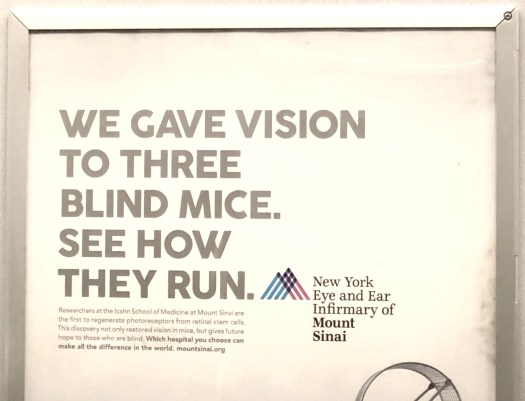
This winter, while perusing the subway marketing — which offers the longest impression a marketer can hope to achieve with New Yorkers these days — I noticed something new on the train walls. It wasn’t an ad for a one-year-old startup offering suitcases for your wanderlust or bed linens for the affordable luxury metropolitan market. It was something else positioned as cutting edge and innovative — the kind of place you’d want to work for or buy from. It wasn’t an ad from a snazzy millennial-run company, but from a hundred-and-seventy-year-old, massive hospital. As large companies are being disrupted by innovative start-ups, large hospitals are finding themselves in the same boat, fighting for market share as their primary path to growth. Now even the old hospital guard has decided to try out some new tricks.

Healthcare companies, primarily in the startup space, have been behaving more and more like CPG start-ups over the past few years. If tracked by subway ads alone*, one could say it started with Capsule, the prescription delivery service. Capsule has helped lead the direct-to-consumer movement in healthcare products. Followers in their footsteps include Hims, Inc. a “health and preventative self-care” company providing an erectile dysfunction product, and Hers, Inc., a birth control provider which advertises “without accessibility, there are no solutions.” Their ads are now plastered on the walls of West 4th St. station and the turnstiles of Times Square.

It appears that large hospitals like Mt. Sinai are feeling just as exposed to and inspired by competing startups as large CPG companies have been over the last decade. Taking a page from the consumer marketing playbook, Mt. Sinai is working to capture mindshare with subway ads. Notably, their ad featured services for the blind — in black-and-white print. You could guess a pragmatic motive, marketing to caretakers of the visually impaired. But with their other patient attraction efforts, it’s more likely they are trying to tap a new market – the millennial. Mt. Sinai is also partnering with a strong brand to win in another market segment: the male market. Through its recent partnership with Man Cave Health, Mt. Sinai is leveraging their unique market positioning – a sports theme – to attract men to it’s healthcare services – in this case prostate health education and care.

There’s another market local practitioners have noted Mt. Sinai’s active sales and marketing efforts in – the elderly poor, with Medicare and Medicaid benefits. And according to independent doctor’s, rather than posters and upgraded, sports-themed waiting rooms, they have used their own nurses and doctors to drive patient conversion. Several private specialists in Harlem have noticed a number of patients leaving for Mt. Sinai, sometimes at their front door. “St. Jude’s, a Mt. Sinai affiliate, used to park its van in front of our entrance,” one doctor noted, “and offered services to my patients.” Another doctor commented, “My patient was surprised when I was no longer covered by their insurance. It turned out on her last hospital visit, her doctor recommended switching from one Healthfirst insurance to the Mt. Sinai Healthfirst insurance. Now only Mt. Sinai services are in-network for her. She didn’t realize that was happening.” Mt. Sinai, it seems, is behaving like any large, mature company. To grow, it must reduce costs and take on new markets. Unfortunately, that means healthcare continues to become more of a business, where hospitals may focus on bringing in patients more than quality of care.

The business of health today increasingly resembles consumer retail, with a growing focus on consumer appeal and patient attraction and retention. But not all aspects of healthcare delivery benefit from business thinking. Perhaps consumers have come to expect slick marketing campaigns in other realms, but personally, I don’t want to be marketed to; I want quality care delivered.

*The measure of New York famous. Includes Dr. Zizmor, but also fast growth startups like FIGS scrubs.

Dogercise: the Millennial parent workout solution

As a new millennial parent, also known as a “pawent”, I have had to make some lifestyle adjustments. As gym sessions got swapped for dog walks, I realized I didn’t want to gain a friend and also a couch bod. I recognized the need to raise the fitness bar with my furry friend. So to complement my airport yoga routine, which helps me stretch my way through JFK on work trips, I’ve developed a plan for me and my dog to both keep up with the squirrels: dogercise. With this new approach to workouts, you’ll see you lose none of your fitness and gain all the time you need with your fuzzy companion.

Bench press → Puppy press

Use a 10-15 lb dog for toning. To build muscle mass, choose a 20-50 lb dog. On a flat back with bent knees, position one hand on the ribs and one hand mid-belly. Repeat 3 sets of 15 reps. Stretch in between by fully extending arms while scratching your dog’s back in reward for being a good boy.

Running → Chasing

In a place where your dog can be off leash, either in a dog park or a living room, chase dog in circles until he or she has been panting for at least 5 minutes. To get your dog highly motivated to maintain the pursuit, bait him or her with a favorite “keep away” object not intended for chewing, such as a shoe or sock. Ensure that the baiting shoe is not one you will miss.

Mason twists → Mason tugs

Sit on the ground with your back angled at 45 degrees. Get your dog engaged with a tug toy by squeaking or shaking in front of his or her nose. Once dog grips the tug toy, raise legs parallel to the ground, with toes pointed, and pull the tug toy under your legs. Pass the tug toy from one hand to the other, until dog has walked a 180 degree arc under your legs. Repeat the passing for 20 reps. Rest in between sets by snuggling your dog.

Yes, you truly can have it all. And as they grow from puppy to adult, yoga may be the next frontier, with tandem downward dog. Namastay. Good boy.

From academia to social media, institutional social responsibility is trending

This year YouTube announced that it is changing its algorithm to stop recommending conspiracy videos. This is a big deal both socially and financially. YouTube has essentially acknowledged that its practices have created a social problem, which they are willing to fix at their own expense.

YouTube’s revenue model benefits from those most easily addicted or drawn in – every minute watched is another opportunity for an ad to be inserted. Developer Guillaume Chaslot shared that conspiracy theorists are particularly susceptible to addiction and, consequently, train the YouTube algorithm to promote their favorite content more broadly, as if the video is seeking out other addicts.

YouTube’s corrective actions are emblematic of a paradigm shift underway. Institutions are not simply trying to maximize their own revenue and societal dominance anymore. Increasingly business leadership sees themselves as accountable for their influence on the world. Most large American businesses have focused on not being complicit with negative social actions. For example, Visa and Discover stopped processing payments to hate groups in 2017. YouTube’s actions move from non-participation to active moves against pernicious societal influence.

Even academia has re-considered its responsibilities to society. Academics are incentivized to maximize the number of papers published; it is the currency of professional success. Yet over the last decade a crisis of confidence has unfolded, where fields from cancer science to psychology have failed to reproduce the majority of their findings from published studies. Consequently, some journals have decided to stand for quality over novelty. For example, the American Journal of Political Science (AJPS) requires submissions to integrate reproducibility into their submissions.

From academia to corporate America, leaders are beginning to lead towards a better society rather than follow raw fame and fortune. Let’s hope that the trend continues to catch on.