Winter is coming: 10 must-haves for quarantine survival

This summer, as we broke out of our quarantine cocoons, we all became nature enthusiasts as we sought out wide-open spaces. The air was sweet and social distancing was easy. But as the leaves are changing, so is the COVID case count trend line — and not for the better. Seeing the Wall in the north signals the worst, and we must be ready for it. Like any epic sequel, we have learned a thing or two since facing the last big bad. Consider last winter’s self-isolation a practice round. This time, you’re going to be ready. With this survival kit, you can stay healthy all winter long, body, mind, and soul.

Body

Your physiological well-being is tier one on Maslow’s hierarchy of needs. Here are three things beyond sheltering in place that will keep you healthy this winter.

1. Roborock
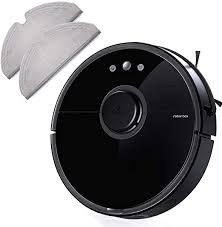
If the pandemic has showed us nothing else, hygiene and health go hand-in-hand. The Roborock S6 MaxV robot vacuum and mop literally does all the dirty work for you by keeping your floors gleaming. With the bad germs gone, you can fully enjoy the Great Indoors.

2. Fitbod

Whether you love working out or hate it, Fitbod really does fit any user. It generates custom workouts based on (1) how often you want to workout, (2) your available equipment, and (3) your freshest muscle groups. You can also adjust the suggest workout modules as you go, so it can truly fit the time you have available and your fitness level. Because of Fitbod, I exercise more than I ever have before: three times a week for 20 minutes. My mother would be proud.

3. Baldor

Baldor is a New York restaurant supplier that started delivering direct-to-consumer at the start of the pandemic. It’s higher quality than Whole Foods, yet less expensive. You can buy European, preservative-free canned tuna and Hudson Valley farm CSA boxes. Their “peak season” and “local” buttons point you to the freshest food available and help you support local businesses. The minimum order size is $200, which isn’t hard to meet if you freeze some of your order. Watch out for item sizes — some SKUs are definitely intended for high-volume restaurants!

Now that you’ve got a plan for your physical health, it’s time think about your mind. (So meta.)

Mind

Boredom ranks as the most common quarantine complaint. But your livingroom doesn’t need to be where creativity goes to die. Below are sources of stimulation and tools that provide some of the interactive flexibility that you had when working in-person.

4. An Ipad + Apple Pencil

When you’re trying to map out an idea or ideate with a team, sometimes you just need a whiteboard. Using tools like Microsoft OneNote or Google Jamboard can enable visual collaboration in real time. And if you want to draw things other people will recognize, mouse scribbles just don’t cut it. An Apple Pencil instantly gives you the same articulation as a whiteboard.

5. Zoom virtual backgrounds

This may seem like a small one, but I think I’ve been around the world and back with all the creative backgrounds I’ve seen and employed. It keeps viewers stimulated in a time of screen fatigue.

6. Books

Remember those? They are what people read before online news and Netflix. Take the opportunity this winter to rediscover what’s on your book shelf, join a book club, or renew your library card. And if you’re not afraid of endless screen time, the New York Public library has an extensive e-book collection.

Now that your body and mind are feeling like well-oiled machines, it’s time to think about the things that make life worth living, the things that feed your soul.

Soul

As I’m sure you learned in the first quarantine, operating at your best takes more than just a healthy body and engaged mind. Below are three things that nourish the soul.

7. WakingUp app

Bestselling author Sam Harris created a guided meditation platform called Waking Up. Through it, you can both practice meditation, and learn the theory behind the practice. It offers a 30-day free trial beginners course that introduces many types of mindfulness meditation, along with access to other mindfulness content. If there’s anything we all need after the crazy year of 2020, it’s help clearing our minds and centering ourselves.

Our minds are all we have. They are all we have ever had. And they are all we can offer others. 

– Sam Harris, best-selling author and neuroscientist

8. Pod buddies

Introvert or extrovert, relationships are rejuvenating. I almost forgot people came in three dimensions until I started meeting a pod body every other week. And now, the world feels a bit more human.

9. A furry pet

If you haven’t yet joined the animal adoption bandwagon, it’s not too late! Even the CDC recommends pet ownership for its physical, emotional, and interpersonal benefits.

The trifecta

There’s one product that offers physical engagement, mental stimulation, and soul-stirring joy rolled all into one.

10. Oculus Quest
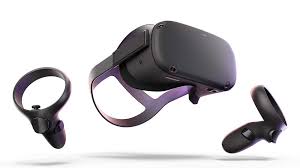
The Oculus Quest‘s Beat Saber offers immersive entertainment, that gets you moving and brings the inexplicable soul highs of electronic music. With the Quest’s new wireless capabilities, it’s a huge upgrade from the Oculus Rift.

Ready Player One was closer than we thought, and with the state of the world in 2020, it’s perfect timing.

Ready for Round 2

Tie a bandana around your head and put on some boxing wraps, because you are ready for the next round of lock down. God speed.

The Index Card Summary of “The Upside of Stress”

In the era of COVID-19, emotional, physical, and financial stress have become inescapable for the foreseeable future. And with every time of hardship, we have a choice about how to respond to it. At least that is the premise of The Upside of Stress: Why Stress is Good for You and How to Get Good at It by Kelly McGonigal, PhD. Her research-based advice can be summed up in 3 simple points:

  1. There are three types of stress responses:
    • Fight or flight response
    • Challenge response
    • Tend and befriend response
  2. You can influence which stress response you experience
  3. Choosing a more helpful response is beneficial in virtually all circumstances

Below is a brief dive into the findings and advice behind each point above.

1. There are three types of stress responses

Stress responses come in three flavors: fight or flight, challenge response, and tend and befriend.

Fight or flight is the best known but most maladaptive, because it primes you to either fight or run — neither of which is appropriate if triggered in most modern settings. (Fist fights with people not observing social distancing is not advisable).

By contrast, the challenge response is a physiological reaction to stress that increases self-confidence, motivates action, and helps you learn from your experience. A challenge response makes you feel focused, not fearful, and creates a sense of flow that allows you to rise to the occasion.

And finally, the tend and befriend response releases stress hormones that increase courage, motivate care-giving, and enhance empathy, leading to strengthened social relationships.

While fight or flight is a self-protective response, the challenge response and tend and befriend response produce more pro-social outcomes.

2. You can influence which stress response you experience

How you think about stress can directly determine how your body processes it. If you perceive stress as a threat, you are more likely to have a fight or flight response, which negatively impacts both your psyche and physiology. Alternatively, if you have an optimistic framing of stress, invoking the challenge response or tend and befriend response, your body will release the types of stress hormones that help you recover and learn.

You can choose to think or act in ways that are known to trigger positive stress responses. Learning a new point of view has been shown to transform the stress response. For example, journalling for five minutes about the hardest experience of your life and what you learned from it that later improved your life can lead to a lasting improvement to life satisfaction and resilience. Specific actions, like volunteering for a charity, can invoke a positive stress response by shifting from self-focus to larger-than-self-focus.

3. Choosing a more helpful response is beneficial in virtually all circumstances

If you harness your stress response to help you engage and grow, over time you can experience “stress inoculation”: your brain will become conditioned to seeing stress as an opportunity to learn. McGonigal has found measurable benefits across social circumstances and psychological states. Adversity creates resilience and correlates with higher satisfaction.

What you can do today

Consider what your narrative about stress is, your behaviors around stress, and how those make you feel. What beliefs can you trade up for ones that give you hope, bravery, resilience, or a sense of connection? Such small shifts in mindset can lead to a cascade of effects. So rather than changing a million things in your life, change your mindset, and the rest will flow.

Airport yoga: the basics

Long weekends like President’s Day can woo us to long flights to the sunshine. And to be in good form for the flight and your vacay, getting your zen on can get you in the right frame to handle the most primal of human settings: the airport gate waiting area. Below are a few simple moves that can be achieved with your travel essentials, including your phone and your luggage.

Upward iPhone

While you’re crafting your last #hashtag before boarding, make a gentle back arch, chin uplifted at a 30° angle, arms gently curved in half circles, holding your phone screen towards your face.

Luggage Lunge

Taking a wide stance, bend your right knee, with your right foot pointed outward, and lengthen your left leg, with the left foot pointing forward. Use your roller luggage handle to stabilize.

Listening Tree Pose

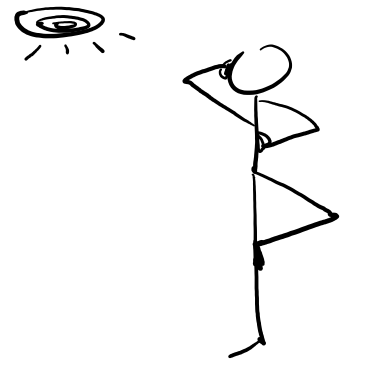
As you desperately crane to listen to sporadic announcements — in case they are for your flight — take a moment to re-center by balancing on one foot, one hand cupped to ear and one hand in prayer position.

Weekend Warrior 1

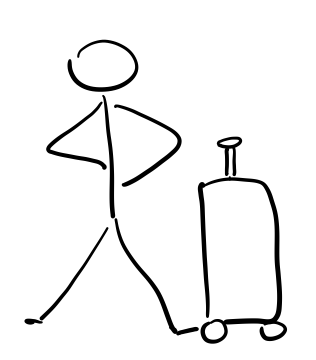
While waiting to board the plane, take a wider then hip distance stance. Place your hands slightly above your hips, and breath deep.

This may deter antsy travelers vying for overhead space from edging in front of you. Move forward at a regular pace, trusting that line-cutters will experience bad karma from observant flight attendants.

Snack Stretch

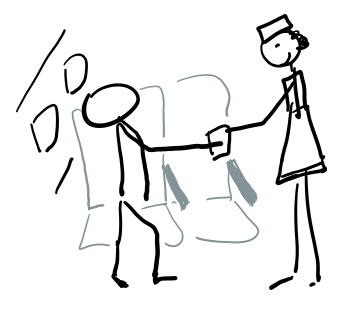
As the stewardess offers you a snack, accept with the outside hand (the one closest to the window), giving you an opportunity to rotate your torso and have a cross-body arm stretch.

Remember before you board to take each waiting opportunity to get that blood flowing and expand outward before you crunch into an economy seat.

Define exercise?

Like many young millennials, I am a bit of a maximizer. I look for the shortest queue at the supermarket. I try to fit in just one more errand en route to a brunch date, so I don’t have to walk back across town later (I’m often just a smidgen late). And I try to max out my fitness benefit that my work provides me.

Rather than simply paying for your gym membership, like many start-ups these days, my corporate office offers a more flexible 75% refund of up to $500 total in fitness spending per year. Rather than throw it all at a ClassPass that I would underutilize during my erratic travel schedule (that wouldn’t be very good maximizing…), I decide to spend it piecemeal. $150 on a new iWatch (it hurt a little when they came out with version 2.0 a few months later…). $50 on some yoga equipment. And then, I was left to wonder with my remaining $300, what expenses qualify?

I remembered some completely miscellaneous items on a list from when I first joined the company, and the dire complaints of a colleague who couldn’t get his form roller reimbursed (“How is this not fitness equipment?!” he balked). So I knew they were pretty selective about what got through. I decided it was time to do a bit of research.

Unfortunately my intranet pointed me to the WageWorks helpline. I call, and proceed to navigate through the touch-tone. I finally reach a human that asks me the same questions as the automated recording. “What are the last four of your social?” I give them to her. “But that’s not what I see in the system!” she practically gasps. “What does that have to do with my question?” I ask. Indeed, clearly whoever writes these call scripts is not a maximizer themselves. If this were a consultant’s dreamland, I could magically inspire Jedi-like focus within her on how to minimize the time of both the callee and caller are on the phone. I’d waive my hand like Obi-Wan, and say in a soothing voice, “You want to cut out the unhelpful form-filling and answer questions as quickly as possible.” “Yes,” Susan would say, “How can I help?”

Finally, after 20 minutes of help line circles, I learn that nothing intuitive seems to count as exercise. “Does Citi Bike [bike sharing] qualify?” “Yes.” Most places would count that as a commuter benefit, but I was happy to take it. “What about roller blades?” “No, that does not qualify”. 

She then points out that all of this stuff is on their website. “Oh!” I say, “I’ll have a look for that.” Of course it wasn’t on the public WageWorks website. It was squirreled away on a private login site hidden within the intranet. 

In support of all maximizers out there, I have provided the list of WageWorks qualifying expenses below. This list can vary by employer, but this is a good starting place. Nutritional counseling is in. Swim classes are out. Logic be damned.

Description Covered Benefit Max Benefit p.a.
Activity Tracker or Smartwatch (once every 3 years) Yes 75% $150
Any expenses not explicitly listed No
Bike Sharing Memberships (Monthly or Annually only) Yes 75% $500
Dance Class No
DVD/Exercise videos Yes 75% $500
Exercise Class Yes 75% $500
Fitness Center, Club or Studio Membership Yes 75% $500
Fitness Counseling Yes 75% $500
Fitness games for game consoles No
Form Rollers No
Golf Lessons (including those from a country club) No
Golf or Country Club Membership No
Gym Membership Yes 75% $500
Health Center or Club Membership Yes 75% $500
Health Spa Membership No
Home Fitness Equipment Yes 75% $500
Initiation Fee (for covered services) Yes 75% $500
Inversion Table No
IWatch with tracking capability Yes 75% $150
Jogging Stroller No
Karate Yes 75% $500
Kick Boxing Yes 75% $500
Locker Service No
Martial Arts Yes 75% $500
Massage Services No
Medical Expenses / Medical Copays No
Monthly billing fee (for covered services) Yes 75% $500
Mountain/Road Bikes (One every five years) Yes 75% $500
Nutrisystem No
Nutritional Counseling Yes 75% $500
Online Classes Yes 75% $500
Personal Trainer Yes 75% $500
Pilates Yes 75% $500
Race Fees Yes 75% $500
Registration Fee Yes 75% $500
Rock Climbing Yes 75% $500
Shoes and Apparel No
Smart Watch with tracking capability Yes 75% $150
Smoking Cessation Products No
Spa Membership No
Spin Classes Yes 75% $500
Swim Club Membership No
Swimming Lessons No
Tae Kwan Do Yes 75% $500
Tai Chi Yes 75% $500
Tennis Club Membership No
Tennis Lessons (including those from a Country Club) No
Towel Service No
Weight Watchers Meals No
Weight Watchers Registration Fee Yes 75% $500
Wireless Activity Tracker (once every three years) Yes 75% $150
Yoga Yes 75% $500
Yoga/Workout Mats Yes 75% $500